Friday, September 28, 2007

Son of Man

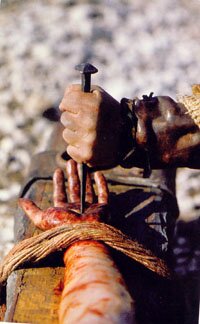
depiction of Christ being nailed to the crossIn the bible, Jesus (Greek: Ίησους (Iēsous), itself a Hellenization of the Hebrew יהושע (Yehoshua) or Aramaic ישוע (Yeshua) often refers to Himself as the Son of Man.
32They were on their way up to Jerusalem, with Jesus leading the way, and the disciples were astonished, while those who followed were afraid. Again he took the Twelve aside and told them what was going to happen to him. 33"We are going up to Jerusalem," he said, "and the Son of Man will be betrayed to the chief priests and teachers of the law. They will condemn him to death and will hand him over to the Gentiles, 34who will mock him and spit on him, flog him and kill him. Three days later he will rise." -Mark 10:32-34

Christian interpretation

The phrase son of man took on Messianic significance within the Christian movement primarily due to the Jewish eschatology during the time of its early conception. Originating in the book of Daniel, in a vision, one like a son of man is described coming upon the clouds of the sky to unite the world. As a result, some Christians believe that in the body of the New Testament, son of man is used forty-three times as a distinctive title of Jesus within this Messianic context. Other Christians interpret it as Jesus showing humility, avoiding using titles like Messiah and Son of God. Still other Christians believe the title is meant to signify Jesus upholding his identification with his humanity and fellowship with mankind, perhaps also conveying the idea that Jesus is the man par excellence. In this last context it serves as putting humans and Jesus on the same level.


More...

Thursday, September 27, 2007

Barnabas

Paul and Barnabas at Lystra. 1650 Oil on canvas. Musée d’Art, Saint-EtienneBarnabas was an early Christian mentioned in the New Testament. His Hellenic Jewish parents called him Joseph, (although the Byzantine text-type calls him Joses, the Aramaic version of Joseph, see also: Aramaic of Jesus) but when he sold all his goods and gave the money to the apostles in Jerusalem, they gave him a new name: Barnabas, which means huios parakleseos (Greek: υιος παρακλήσεως) "son of exhortation," or 'man of encouragement.' see Acts 11:23) and connotes a prophet in the primitive Christian sense of the word (see Acts 13:1; 15:32). His feast day is June 11. In many English translations of the Bible, including the New International Version (NIV), King James Version (KJV), and New American Standard Bible (NASB), Barnabas is called an apostle. In Acts 14:14 of these translations, he is listed ahead of Paul, "Barnabas and Paul," instead of "Paul and Barnabas;" both men being described as apostles. Whether Barnabas was an apostle became an important political issue, which was debated in the Middle Ages.
8-10There was a man in Lystra who couldn't walk. He sat there, crippled since the day of his birth. He heard Paul talking, and Paul, looking him in the eye, saw that he was ripe for God's work, ready to believe. So he said, loud enough for everyone to hear, "Up on your feet!" The man was up in a flash—jumped up and walked around as if he'd been walking all his life.

11-13When the crowd saw what Paul had done, they went wild, calling out in their Lyconian dialect, "The gods have come down! These men are gods!" They called Barnabas "Zeus" and Paul "Hermes" (since Paul did most of the speaking). The priest of the local Zeus shrine got up a parade—bulls and banners and people lined right up to the gates, ready for the ritual of sacrifice.

14-15When Barnabas and Paul finally realized what was going on, they stopped them. Waving their arms, they interrupted the parade, calling out, "What do you think you're doing! We're not gods! We are men just like you, and we're here to bring you the Message, to persuade you to abandon these silly god-superstitions and embrace God himself, the living God. We don't make God; he makes us, and all of this—sky, earth, sea, and everything in them. -Acts 14:10-15 (The Message)

More...

Wednesday, September 26, 2007

documentary hypothesis

A relational diagram describing the various versions postulated by the biblical documentary hypothesis. The documentary hypothesis (DH) proposes that the first five books of the Old Testament (Genesis, Exodus, Leviticus, Numbers and Deuteronomy, known collectively as the Torah or Pentateuch), represent a combination of documents from four originally independent texts dating from various periods between the early 8th and late 5th centuries BCE. The hypothetical texts are:

  • the J, or Yahwist, text

  • the E, or Elohist, text (edited with J to form a combined JE text)

  • the P, or Priestly, text

  • the D, or Deuteronomist, text (which had a further major edit, resulting in sub-texts known as Dtr1 and Dtr2).
The texts were combined into their current form in the post-Exilic period (late 5th century BC) by an editor known as R (for Redactor, see Torah redactor), who also made small additions to harmonise discrepencies between his sources.

More...

Tuesday, September 25, 2007

The Lord's Day

The Scotish Church - view from Mishkenot Sha’ananim, Jerusalem (photo © Deror avi) The "Lord's Day" is used by the Apostle John in Revelation 1:10, when John starts receiving his Revelations on the Jewish Sabbath. He is clearly quoting Jesus in Matt. 12:8 where he says: "I'm the LORD OF THE SABBATH."

The name Lord's Day

Origins

The first appearance of the term kyriake hemera is in the New Testament, in the Book of Revelation, which was written in the latter decades of the first century.

In Rev. 1:10, the author writes, "I was in the Spirit on the Lord's Day." Most Christian commentators interpret Rev. 1:10 as a reference to Sunday, however this interpretation lacks contextual force since nothing in the passage implies he's talking about the first day of the week, Sunday. Also, the argument that the Lord's Day in Revelation 1:10 refers to the eschatological day of the Lord lacks contextual force as well since nothing in the adjacent passage implies the Second Coming or the Day of Judgment. Based on Jesus assertion that he was the "Lord of the Sabbath" (cf. Matt. 12:8), the "Lord's Day" of Revelation can only refer to the Jewish Sabbath, observed by Jesus and his Apostles.


More...

Monday, September 24, 2007

Exegesis

Tree of Life, MedievalExegesis (from the Greek ἐξηγεῖσθαι 'to lead out') involves an extensive and critical interpretation of a text, especially of a holy scripture, such as of the Old and New Testaments of the Bible, the Talmud, the Midrash, the Qur'an, etc. An exegete is a practitioner of this science, and the adjectival form is exegetic.

The word exegesis means "to draw the meaning out of" a given text. Exegesis may be contrasted with eisegesis, which means to read one's own interpretation into a given text. In general, exegesis presumes an attempt to view the text objectively, while eisegesis implies more subjectivity.

One may encounter the terms exegesis and hermeneutics used interchangeably; however, there remains a distinction. Exegesis is the practical application of hermeneutics, which is the interpretation and understanding of a text on the basis of the text itself.


Traditional exegesis requires the following: analysis of significant words in the text in regard to translation; examination of the general historical and cultural context, confirmation of the limits of the passage, and lastly, examination of the context within the text.


Although the most widely-known exegeses concern themselves with Christian, Jewish and Islamic books, analyses also exist of books of other religions.

More...

Friday, September 21, 2007

The parables of Jesus

The Good Samaritan, Rembrandt Harmensz. van RijnThe parables of Jesus, found in the Synoptic Gospels, embody much of Jesus' teaching. Jesus' parables are quite simple, memorable stories, often with humble imagery, each with a single message. Jesus, for example, likened the Kingdom of God to leaven (an image usually meant as corruption) or a mustard seed. Like his aphorisms, Jesus' parables were often surprising and paradoxical. The parable of the good Samaritan, for example, turned expectations on their head with the despised Samaritan proving to be the wounded man's neighbor. The parables were simple and memorable enough to survive in an oral tradition before being written down years after Jesus' death.

His parables are sometimes interpreted as allegories in the gospels themselves and in Christian tradition. In such an allegory, each element corresponds metaphorically to a class of people (e.g., false Christians), a heavenly reward, or some other topic. The gospel of John includes allegories but no parables. Parables are attributed to Jesus in the three synoptic gospels of the New Testament and the noncanonical Gospel of Thomas. According to some interpretations, the Gospel of John also contains a parable.

More...

New Testament view on the life of Jesus

Jesus Christ being nailed to the cross The four canonical gospels of the New Testament are the main sources of information for the traditional Christian narrative of Jesus' life.

The Gospels give two accounts of Jesus' genealogy: one in the male line through his legal father Joseph of Nazareth (Matt 1:2–16 and one through his mother, Mary, while referencing his supposed father; Luke 3:23–38). Both accounts trace his line back to King David and from there to Abraham. These lists are identical between Abraham and David, but they differ between David and Joseph. Matthew starts with Solomon and proceeds through the kings of Judah to the last king, Jeconiah. After Jeconiah the line of kings terminated when Babylon conquered Judah. Thus, Matthew shows that Jesus is the legal heir to the throne of Israel. Luke's genealogy is longer than Matthew's; it goes back to Adam and provides more names between David and Jesus, thus giving us direct descendants from Adam to Jesus through Mary.

Joseph of Nazareth appears only in descriptions of Jesus' childhood. With Jesus commending Mary into the care of the beloved disciple during his crucifixion (John 19:25–27), it is likely that he had died by the time of Jesus' ministry. Both Matthew 13:55–56 and Mark 6:3 tell of Jesus' relatives. Mark 6:3 reports that those hearing Jesus asked, "Isn't this the carpenter? Isn't this Mary's son and the brother of James, Joseph, Judas and Simon? Aren't his sisters here with us?" The apostle Paul, in his letter to the Galatians, mentions at 1:19 that "I saw none of the other apostles—only James, the Lord's brother." The first-century Jewish historian Flavius Josephus also describes James the Just as "the brother of Jesus, who was called Christ" (translation of William Whiston), though this passage has been suggested as an interpolation (see Josephus on Jesus). Additionally, the Christian historian Eusebius (who wrote in the 4th century but quoted earlier sources that are now lost) refers to James the Just as Jesus' brother (see Desposyni). However, Epiphanius argued that they were "Joseph's children by his (unrecorded) first wife", while Jerome argued that they were "Jesus' cousins". The Greek word adelphos in these verses is often translated as brother in many Bible translations. However, the word can refer to any familial relation, and Roman Catholic and Eastern Orthodox traditions, along with certain other Christians, cite later revelations concerning the perpetual virginity of Mary, contend the correct translation of adelphos is kinsman or cousin.

More...

Thursday, September 20, 2007

miracles of Jesus

Resurrection of Lazarus by Juan de Flandes, around 1500.According to the canonical Gospels, Jesus performed many miracles in the course of His ministry. The majority of them are various cures, although there are a large number of exorcisms, three instances of raising the dead, and various other miracles that do not fit into these categories.

Power over deathThe Gospels report three cases where Jesus calls a dead person back to life. In one, the daughter of Jairus had just died, and Jesus says she was only sleeping and wakes her with a word. Another case involves a young man being brought out for burial. When Jesus sees his widowed mother, he has pity and raises him from the dead. The third case involves a close friend of Jesus, Lazarus (right), who has been four days in the tomb.

Expelling demonsBelief in supernatural creatures was very common in the first century Judea, as it was nearly everywhere in the world.

According to a literal reading of the Synoptic Gospels, Jesus was present at multiple examples of demonic possession, while these incidents are not mentioned by the Gospel of John.

More...

Wednesday, September 19, 2007

Josephus on Jesus

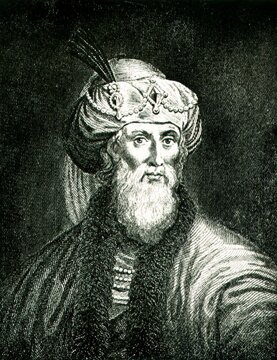
A woodcut of Flavius Josephus by John C. Winston.In 93, the Jewish historian Flavius Josephus published his work Antiquities of the Jews. The extant copies of this work, which all derive from Christian sources, even the recently recovered Arabic version, contain two passages about Jesus. The one directly concerning Jesus has come to be known as the Testimonium Flavianum, and its authenticity has been disputed since the 17th century. The other passage concerns James the brother of Jesus.

Testimonium Flavianum

Greek version

The passage appears in Antiquities of the Jews xviii 3.3, which, in the translation of William Whiston, reads:

3. Now there was about this time Jesus, a wise man, if it be lawful to call him a man; for he was a doer of wonderful works, a teacher of such men as
receive the truth with pleasure. He drew over to him both many of the Jews and
many of the Gentiles. He was [the] Christ. And when Pilate, at the suggestion of
the principal men amongst us, had condemned him to the cross, those that loved
him at the first did not forsake him; for he appeared to them alive again the
third day; as the divine prophets had foretold these and ten thousand other
wonderful things concerning him.

And the tribe of Christians, so named from him, are not extinct at this day.

As usual with ancient texts, the surviving sources for this passage are Greek manuscripts, all minuscules, the oldest of which dates from the 9th century. It is likely that these all derive from a single exemplar written in uncial, as is the case with most other ancient Greek texts transmitted to the present in medieval copies, and have come down through the hands of the church. The text of Antiquities appears to have been transmitted in two halves — books 1–10 and books 11–20. But other ad hoc copies of this passage also exist. However, other manuscripts existed which did not contain this passage, and one such was known to Isaac Vossius.

There are also citations in other writers of antiquity.

More...

Tuesday, September 18, 2007

lineage of Jesus

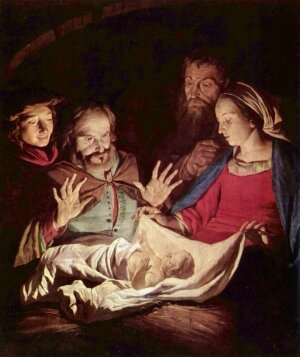
The infant Jesus in Adoration of the Shepherds, Gerard van HonthorstThe lineage of Jesus is recorded in two places in the bible:
1) Matthew 1:1-17, and

2) Luke 3:23-38 (in addition to several other new testament references: Mark 10:47, luke 1:32, Acts 2:29-30, Rev. 5:5, 22:16).

The Matthew 1:1-17 and Luke 3:23-38 accounts differ because, Luke follows Mary's lineage (Jesus' blood mother), through David's son Nathan (Luke's genealogy focused on Jesus' descent from God through the virgin birth. It placed no emphasis on Jesus being the descendant of king David) and the Matthew genealogy follows Joseph's line (Joseph being the legal father of Jesus, see below) through David's son Solomon.

God's promise to David was fulfilled because mary was the biological parent of Jesus.

The virgin birth also addressed the curse God had pronounced upon Jehoiakim. Kingship was an inherited right. By Joseph, Jesus inherited a legal claim to the throne of David. However, he was exempt from the curse of Jehoiakim (Jeremiah 36:1-32, i.e. Joseph's offspring could not claim David's throne because of the curse) because Joseph was not the genetic father of Jesus.

More...

Monday, September 17, 2007

historicity of Jesus

Jesus, aged 12, teaching the doctors of the faithThe historicity of Jesus (i.e., his existence as an actual historical figure), is accepted as a theological axiom by three world religions, Christianity, Islam and the Bahá’í Faith, based on their respective scriptures.

The earliest known sources are Christian writings - the New Testament - which, according to modern historians, were written several decades after he is said to have died.

However, while Christianity and the Bahá'í Faith also consider Jesus to be the Christ (Messiah) and Son of God, and Islam views him as a prophet, secular historians and followers of most other world religions (including Judaism) tend to regard him as an ordinary human.

Most scholars, however, agree that Jesus was an historical figure regardless of their perspectives on His teaching, His message of salvation, or statements about Himself.

More...

Saturday, September 15, 2007

Jerusalem

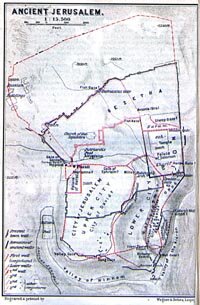
From Palestine and Syria. Handbook for Travellers by Karl Baedeker, 5th Edition, 1912Jerusalem is the holiest city of Judaism (since the 10th century BCE) and some denominations of Christianity (since the 5th century CE) and, after Mecca and Medina, the third holiest city of Islam (since the 7th century CE). A heterogeneous city, Jerusalem represents a wide range of national, religious, and socioeconomic groups. The section called the "Old City" is surrounded by walls and consists of four quarters: Armenian, Christian, Jewish, and Muslim.

37"O Jerusalem, Jerusalem, you who kill the prophets and stone those sent to you, how often I have longed to gather your children together, as a hen gathers her chicks under her wings, but you were not willing. 38Look, your house is left to you desolate. 39For I tell you, you will not see me again until you say, 'Blessed is he who comes in the name of the Lord." -יהושע Yehoshua, Matthew 23:37-39
The status of the united Jerusalem as Israel's capital is not widely recognized by the international community, and Israel's annexation of East Jerusalem is particularly controversial.

Jerusalem has long been embedded into the religious consciousness of the Jewish people. Jews have always studied and personalized the struggle by King David to capture Jerusalem and his desire to build the Jewish temple there, as described in the Book of Samuel and the Book of Psalms. Many of King David's yearnings about Jerusalem have been adapted into popular prayers and songs.

More...

Friday, September 14, 2007

Rome

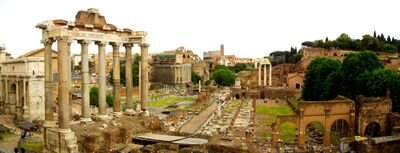
The Roman Forum was the central area around which ancient Rome developedAncient Rome was a civilization that grew out of the city-state of Rome, founded on the Italian peninsula around 800 BC. During its twelve-century existence, the Roman civilization shifted from a monarchy to an oligarchic republic to a vast empire. It came to dominate Western Europe and the entire area surrounding the Mediterranean Sea through conquest and assimilation.

The western half of the empire, including Hispania, Gaul, and Italia, eventually succumbed to a number of factors and broke into independent kingdoms in the 5th century (see The Roman Empire). The eastern empire, governed from Constantinople, is referred to as the Byzantine Empire after 476 AD.

The city of Rome grew from settlements around a ford on the river Tiber, a crossroads of traffic and trade.

According to archaeological evidence, the village of Rome was probably founded sometime in the 9th century BC by members of two central Italian tribes, the Latins and the Sabines, on the Palatine, Capitoline, and Quirinal Hills.

The Etruscans, who had previously settled to the north in Etruria, seem to have integrated into the region by the late 9th century BC and formed the aristocratic and monarchial elite. The Etruscans apparently lost power in the area by the late 6th century BC, and at this point, the original Latin and Sabine tribes reinvented their government by creating a republic, with much greater restraints on the ability of rulers to exercise power.

More...

Thursday, September 13, 2007

Tarsus

Location of Tarsus in TurkeyTarsus (Greek Ταρσός) is a city and a large district in Mersin Province, Turkey, 25 km from the city of Mersin and near (40 km) to the city of Adana.

With a history going back 5,000 years Tarsus has long been an important stop for traders to the Orient, a focal point of many civilisations including the Ancient Romans when Tarsus was capital of the province of Cilicia, scene of the romance between Mark Anthony and Cleopatra and birthplace of Saint Paul.


Because of its critical and strategic location, invulnerable from the Tarus Mountains, from the north, and the Mediterranean, on the south, the city was a treasure for many peoples. After the Roman Empire Tarsus wasted away to a small city in the aftermath of hostilities between differing Christian and Muslim empires.


In about 170 BC Tarsus became a free city, leaving it open to Greek culture and Education. By the time of Christ, Tarsus was on a cultural parallel with great cities such as Athens and Alexandria, being a pedagogical center of the world.


Paul Speaks to the Crowd

21

37As the soldiers were about to take Paul into the barracks, he asked the commander, "May I say something to you?"


"Do you speak Greek?" he replied. 38"Aren't you the Egyptian who started a revolt and led four thousand terrorists out into the desert some time ago?"


39Paul answered, "I am a Jew, from Tarsus in Cilicia, a citizen of no ordinary city. Please let me speak to the people."


40Having received the commander's permission, Paul stood on the steps and motioned to the crowd. When they were all silent, he said to them in Aramaic:


22

1"Brothers and fathers, listen now to my defense." 2When they heard him speak to them in Aramaic, they became very quiet. -Paul of Tarsus (Acts 21:37-22:11)


More...

Wednesday, September 12, 2007

Jericho

The Taking of Jericho, by Jean FouquetJericho (Arabic أريحا , Hebrew יְרִיחוֹ ) - Holy echo is a town in the West Bank, Palestine near the Jordan River. Jericho has a population of approximately 19,000. It is believed by some to be the oldest continuously occupied settlement in the world. The current mayor of Jericho is Hassan Saleh.

Archaeology

Three separate settlements have existed at or near the current location for more than 11,000 years. The position is on an east-west route north of the Dead Sea.

The first archaeological excavations of the site were made by Charles Warren in 1868. Ernst Sellin and Carl Watzinger excavated Tell es-Sultan and Tulul Abu el-'Alayiq between 1907-1909 and in 1911. John Garstang excavated between 1930 and 1936. Extensive investigations using more modern techniques were made by Kathleen Kenyon between 1952 and 1958. Lorenzo Nigro and Nicolo Marchetti conducted a limited excavation in 1997. Later that same year, Dr. Bryant Wood also made a visit to the site to verify the findings of the earlier 1997 team.


More...

Tuesday, September 11, 2007

Damascus

Wall of the New Testament period (called Bab Kisan) in Damascus where Paul escaped to begin his ministry.Damascus (Arabic: دمشق‎) is the capital and largest city of Syria, with close ties to Israel. Founded approximately 2500 BCE, it is thought to be the oldest continuously inhabited city in the world, before Al Fayyum, and Gaziantep. Its current population is estimated at about 4.5 million.

Name


In Arabic, the city is called دمشق الشام Dimashq ash-Shām.


Although this is often shortened to Dimashq by many, the citizens of Damascus, and of Syria and some other Arab neighbors, colloquially call the city ash-Shām. Ash-Shām is an Arabic term for North and for Syria. (Syria — particularly historical Greater Syria — is called Bilād ash-Shām — بلاد الشام, 'country of the north' — in Arabic.) The English name for Damascus is taken from the Greek Δαμασκός, via Latin. This comes from the old Aramaic (see also: Aramaic of Jesus) name for the city — דרמשק Darmeśeq, which means "a well-watered place". However, pre-Aramaic tablets unearthed at Ebla refer to a city to the south of Ebla named Damaski. It is possible that the name 'Damascus' pre-dates the Aramaic era of the city. Damascus is designated as having been part of the ancient province of Amurru in the Hyksos Kingdom, from 1720 to 1570 BC. (MacMillan, pp. 30-31).


More...

Monday, September 10, 2007

Hebron

cave of MachpelahHebron (Al-Khalil) (Arabic الخليل, Hebrew חֶבְרוֹן derived from the word "friend") is a town in the Southern Judea region of the West Bank of around 130,000 Palestinians and 500 Israeli settlers. It lies 3,050 feet (930 m) above sea level.

Geographic coordinates : 31°32' N, 35°6' E

Hebron is located 30km south of Jerusalem. Its elevation from sea level is about 1000m. Hebron is famous for its grapes, limestones, pottery workshops and glassblowing factories. It is also home of the nationally famous Al-Juneidi factory for dairy products.

The old city of Hebron is characterized by its narrow and winding streets, the flat-roofed stone houses, and the old bazaars. It is the home of Hebron University and Palestine Polytechnic University.


More...

Saturday, September 08, 2007

Amos

Engraving of the Prophet Amos (1891)The Book of Amos is one of the books of the Nevi'im and of the Old Testament.

Authorship

Amos was a prophet during the reign of Jeroboam ben Joash (Jeroboam II), ruler of Israel from 753 BCE to 793 BCE, and the reign of Uzziah, King of Judah, at a time when both kingdoms (Israel in the North and Judah in the South) were peaking in prosperity. He was a contemporary of the prophet Hosea, but likely preceded him. Many of the earlier accounts of prophets found in the Old Testament are found within the context of other accounts of Israel's history. Amos, however, is the first prophet whose name also serves as the title of the corresponding biblical book in which his story is found.

Time When Written

Most scholars believe that Amos gave his message in the autumn of 750 BC or 749 BC. It is generally understood that his preaching at Bethel lasted only a single day at the least and a few days at the most. Leading up to this time, Assyrian armies battled against Damascus for a number of years, which greatly diminished Syria's threat to Israel. As a result of the fighting amongst its neighbors, Israel had the benefit of increasing its borders almost to those of the time of kings David and Solomon.

More...

Friday, September 07, 2007

Zechariah

Zechariah as depicted on Michelangelo's ceiling of the Sistine ChapelZechariah or Zecharya (Hebrew: זְכַרְיָה, "Renowned/Remembered of/is the Lord") was a person in the Bible Old Testament and Jewish Tanakh. He was the author of the Book of Zechariah.

It is a theophoric name, the ending -iah being a short Hebrew form for the Tetragrammaton, which was very commonly in its times in association with people & places names.

He was a prophet of the two-tribe kingdom of Judah, and the eleventh of the minor prophets. Like Ezekiel, he was of priestly extraction. He describes himself (Zechariah 1:1) as "the son of Berechiah." In Ezra 5:1 and 6:14 he is called "the son of Iddo," who was properly his grandfather. His prophetical career began in the second year of Darius, king of Persia (B.C. 520), about sixteen years after the return of the first company from their Babylonian exile. He was contemporary with Haggai (Ezra 5:1).

Although there is an indication inTargum Lamentations that "Zechariah son of Iddo" was killed in the Temple, scholars generally understand this as a reference to the death of a much earlier figure, Zechariah Ben Jehoiada.

On the Eastern Orthodox liturgical calendar, his feast day is February 8. He is commemorated with the other Minor prophets in the Calendar of saints of the Armenian Apostolic Church on July 31.


More...

Thursday, September 06, 2007

Daniel

The prophet Daniel from Michelangelo’s Sistine Chapel ceilingDaniel (Hebrew: דָּנִיֵּאל, Arabic: دانيال, Danyal) is a figure appearing in the Hebrew Bible and the central protagonist of the Book of Daniel. The name "Daniel" means "God is my judge" or "God's judge."

Daniel was a young man of the upper crust of Jewish society who was taken captive by Nebudchadnezzar, king of Babylon and the Chaldean dynasty. Nebudchadnezzar endeavored to remove all traces of Daniel's nationality and religion. For this reason they strove to change Daniel's name to Belteshazzar: (Dan. 1:7; 2:26; 4:8-9, 18-19; 5:12; 10:1).


At the first deportation of the Jews by Nebuchadnezzar II (the kingdom of Israel had come to an end nearly a century before at the hands of the Assyrians), or immediately after his victory over the Egyptians at the second battle of Carchemish, in the fourth year of the reign of Jehoiakim (B.C. 606), Daniel and three other noble youths named Shadrach, Meshack, and Abednego were among the Jewish young nobility carried off to Babylon (probably as hostages to ensure the loyalty of Judah's king and advisors), along with some of the vessels of the temple. Daniel and his three Jewish companions were subsequently evaluated and chosen for their intellect and beauty, to be trained as Chaldeans, who constituted the ranks of the advisors to the Babylonian court.

More...

Wednesday, September 05, 2007

Jeremiah

The figure of Jeremiah on the Sistine Chapel ceiling, <br />by Michelangelo.Jeremiah or Yirmiyáhu (יִרְמְיָהוּ) His writings are collected in the book of Jeremiah, and the Book of Lamentations. Jeremiah is considered by some modern scholars (as well as some Ancient Rabbis) to have written, or redacted much of the Old Testament, as we have it today. His language in "Jeremiah" and "Lamentations" is quite similar to that in Deuteronomy and the "Deuteronomic history" of Joshua, Judges, the Books of Samuel, and the Books of Kings. Jeremiah is also famous as "the broken-hearted prophet" (who wrote or dictated a "broken book", which has been difficult for scholars to put into chronological order), whose heart-rending life, and true prophecies of dire warning went largely-unheeded by the people of Judah. YHWH told Jeremiah, "You will go to them; but for their part, they will not listen to you".

According to the Book of Jeremiah, he was called to the prophetical office when still young; in the thirteenth year of Josiah (628 BC). He left his native place, Anatoth, (where Jeremiah was perhaps a member of the priesthood) and went to reside in Jerusalem; where he assisted Josiah in his work of reformation.

More...

Tuesday, September 04, 2007

Ezekiel

The prophet Ezekiel, Sistine Chapel The book of Ezekiel is a book of the Jewish Hebrew bible as well as the Christian Old Testament, attributed to the prophet Ezekiel (Hebrew: יחזקאל, Yehezkel). He is commemorated as a saint in the Calendar of saints of the Eastern Orthodox Church on July 21 and of the Armenian Apostolic Church on August 28.

According to the Book of Ezekiel


The Book of Ezekiel gives little detail about Ezekiel's life. In it, he is mentioned only twice by name: 1:3 and 24:24. Ezekiel is a priest, the son of Buzi (my contempt), and his name means "God will strengthen". He was one of the Israelite exiles, who settled at a place called Tel-abib, on the banks of the Chebar, "in the land of the Chaldeans." The place is thus not identical to the modern city Tel Aviv, which is, however, named after it. He was probably carried away captive with Jehoiachin (1:2; 2 Kings 24:14-16) about 597 BC.


More...

Monday, September 03, 2007

Book of Revelation

John the Apostle on the Island of PatmosThe Book of Revelation, also called Revelation to John or Apocalypse of John is the canonical book of the New Testament commonly placed last in the Bible. It is the only biblical book that is wholly composed of apocalyptic literature.

Naming
The book is frequently called "Book of Revelation" or simply "Revelation"; however, the title found on some of the earliest manuscripts is "The Apocalypse/Revelation of John" (ΑΠΟΚΑΛΥΨΙΣ ΙΩΑΝΝΟΥ), and the most common title found on later manuscripts is "The Apocalypse/Revelation of the theologian" (ΑΠΟΚΑΛΥΨΙΣ ΤΟΥ ΘΕΟΛΟΓΟΥ). Many mistake The Book of Revelation for the plural revelations, which is false; there was only one known revelation recorded in the author's manuscript. The first sentence of the book, The Revelation of Jesus Christ ... unto his servant John, is also sometimes used as a title.

More...

Saturday, September 01, 2007

Mount of Olives

The Jewish cemetery on the Mount of Olives, overlooking the Old CityThe Mount of Olives (also Mount Olivet, Hebrew: Har HaZeitim הר הזיתים, sometimes Jebel et-Tur, "Mount of the Summit," or Jebel ez-Zeitun, "Mount of Olives") is a mountain ridge to the east of Jerusalem. It is named from the olive trees with which its sides are clothed. Jesus entered Jerusalem, gave his final teaching, and ascended to heaven from the Mount. It is the site of many important Biblical events.

In the Book of Zechariah the Mount of Olives is identified as the place from which God will begin to redeem the dead at the end of days.

For this reason, Jews have always sought to be buried on the mountain, and from Biblical times to the present day the mountain has been used as a cemetery for the Jews of Jerusalem.

More...

Friday, August 31, 2007

Mount Hermon

Mount Hermon, viewed from Mount Bental Mount Hermon (33°24′N 35°51′E; Hebrew: הר חרמון, Har Hermon; Arabic: جبل الشيخ‎, Jabal el-Shaiykh, Djabl a-Shekh, "mountain of the chief" and "snowy mountain") is a mountain in the Anti-Lebanon mountain range. Its highest point is 2,814 m (9,230 feet) above sea level, and is on the border between Syria and Lebanon.

Though the summit remained under Syrian control, the southern and western slopes of Mount Hermon came under the control of Israel as part of the Golan Heights as a result of the Israeli victory in the 1967 Six-Day War, and were unilaterally annexed by Israel in 1980. the nation" in Israel because its altitude makes it Israel's primary strategic early warning system.


Biblical History

Mount Hermon was called Senir by the Amorites and Sirion by the Sidonians (Deuteronomy 3:9; Psalms 29:6; 1 Chronicles 5:23; Song of Solomon 4:8; Ezekiel 27:5). The mountain served as the northern boundary of the Promised Land (Deuteronomy 3:8) and also was the northern limit of the Conquest (Joshua 11:17; 12:1; 13:5).
More...

Thursday, August 30, 2007

Mount Carmel

University of Haifa atop Mount Carmel in 1996 Mount Carmel is a coastal mountain range in Israel overlooking the Mediterranean Sea. Its name is derived from the Hebrew "Karem El" which means 'vineyards of God'. In ancient times it was covered by vineyards and was at all times famous for its fertility.

A Syrian Philosopher of the 4th century A.D., called Iamblichus, wrote that Mount Carmel was "the most holy of all mountains and forbidden of access to many."

Geography

Mount Carmel is 16 miles long by 4-5 miles wide and 1,800 feet high. The city of Haifa is partially on Mount Carmel, and so are a few smaller towns such as Nesher, Tirat Hakarmel, Yokneam and Zikhron Ya'aqov. The city of Acre (also known as Akko) is more or less across the bay on the north side.

More...

Wednesday, August 29, 2007

Mount Ararat

View of Mount AraratMount Ararat (Hebrew: אֲרָרָט) is the tallest peak in modern Turkey. This snow-capped, dormant volcanic cone is located in the Ağrı Province, near the northeast corner of Turkey, 16 km west of the Iranian and 32 km south of the Armenian borders.

During the time of Noah, this mountain was completely covered with water:

17For forty days the flood kept coming on the earth, and as the waters increased they lifted the ark high above the earth. 18The waters rose and increased greatly on the earth, and the ark floated on the surface of the water. 19They rose greatly on the earth, and all the high mountains under the entire heavens were covered. 20The waters rose and covered the mountains to a depth of more than twenty feet. (Genesis 7:17-20)

More...

Tuesday, August 28, 2007

Mount Nebo

The Dead Sea is viewable in the distance from atop Mount Nebo. The promised land is just beyond the Jordan River and the Dead SeaMount Nebo (Arabic: جبل نيبو; transliterated: Jabal Nībū) is an elevated ridge that is approximately 817 metres (2680 feet) above sea level, in what is now western Jordan. The view from the summit provides a panorama of the Holy Land, and to the north, a more limited one of the valley of the River Jordan. The West Bank city of Jericho is usually visible from the summit, as is Jerusalem on a very clear day.

Judaism and Christianity
According to the final chapter of Deuteronomy, Mount Nebo is where the Hebrew prophet Moses was given a view of the promised land that God was giving to the Hebrews.

More...

Monday, August 27, 2007

Mount Sinai

View of the Summit of Mount SinaiMount Sinai, also known as "Gebel Musa" or "Jabal Musa" by the Bedouins, is the name of a mountain in the Sinai Peninsula. It is 2,285 metres high and is located in a mountain range in the southern part of the peninsula. It is near a protruding lower bluff known as the Ras Sasafeh (Sufsafeh), and rises almost perpendicularly from the plain.

To some scholars it is the same as the Biblical Mount Sinai, though this is not agreed upon. The name Sinai comes probably from the Moon God Sin, similar to the Desert of Sin.

Judaism teaches that as soon as the Jewish people received the Bible at Mt. Sinai, they would be hated by the rest of the world for having been the ones to receive divine word (a state of affairs presented as a pun: Sinai as Seen-ah, which means hatred). The area was reached by the Hebrews in the third month after the Exodus. Here they remained encamped for about a year. The last twenty-two chapters of Exodus, together with the whole of Leviticus and Numbers ch. 1-11, contain a record of all the transactions which occurred while they were at Mount Sinai.

More...

Saturday, August 25, 2007

Christian eschatology

The Last Judgement - Fresco in the Sistine Chapel by Michelangelo.In Christian theology, Christian eschatology is the study of its religious beliefs concerning all future and final events (End Times), as well as the ultimate purpose(s) of the world (i.e., mortal life), of mankind, and the Church. Where eschatology refers to doctrine that represents a history of inquiry into the concept of the destiny of all things, in Christian context, this inquiry is vested in the prophesied purposes of God as documented in the Bible.

Introduction

The "last things" are important issues to Christian faith, although eschatology is a relatively recent development as a formal division of Christian theology.

Epistle to the Romans 8:19-25:

19The creation waits in eager expectation for the sons of God to be revealed. 20For the creation was subjected to frustration, not by its own choice, but by the will of the one who subjected it, in hope 21that the creation itself will be liberated from its bondage to decay and brought into the glorious freedom of the children of God.

22We know that the whole creation has been groaning as in the pains of childbirth right up to the present time. 23Not only so, but we ourselves, who have the firstfruits of the Spirit, groan inwardly as we wait eagerly for our adoption as sons, the redemption of our bodies. 24For in this hope we were saved. But hope that is seen is no hope at all. Who hopes for what he already has? 25But if we hope for what we do not yet have, we wait for it patiently.

More...

Friday, August 24, 2007

Preterism

Ezekiel’s Vision: Resurrection of the DeadPreterism is a variant of Christian eschatology which holds that some or all of the biblical prophecies concerning the Last Days (or End Times) refer to events which actually happened in the first century after Christ's birth. The term preterism comes from the Latin praeter, meaning "past". Adherents of Preterism are known as Preterists. The two principal schools of Preterist thought are commonly called Partial Preterism and Full Preterism.

There is substantial disagreement over the terms used to denote these divisions of Preterist thought. Some Partial Preterists prefer to call their position Orthodox Preterism, thus contrasting their deference to the creeds of the Ecumenical Councils with what they perceive to be the Full Preterists' disregard for the same. Partial Preterism is also sometimes called Classical Preterism or Moderate Preterism. Some Full Preterists prefer to call their position Consistent Preterism, reflecting their extension of Preterism to all biblical prophecy and suggesting an inconsistency in the Partial Preterist hermeneutic.


Sub-variants of Preterism include one form of Partial Preterism which places fulfillment of some eschatological passages in the first three centuries of the current era, culminating in the fall of Rome. In addition, certain statements from classical theological liberalism are easily mistaken for Preterism, as they hold that the biblical record accurately reflects Jesus' and the Twelve Apostles' belief that all prophecy was to be fulfiled within their generation. Theological liberalism generally regards these apocalyptic expectations as errant or disappointed, though, so it is not strictly accurate to class this view as a form of Preterism.

More...

Thursday, August 23, 2007

Postmillennialism

Comparison of Christian millennial interpretationsIn Christian eschatology, postmillennialism is an interpretation of chapter 20 of the Book of Revelation which sees Christ's second coming as occurring after (Latin post-) the millennium, the Golden Age or era of Christian prosperity and dominance. The term subsumes several similar views of the end times, and it stands in contrast to premillennialism and amillennialism.

Although some postmillennialists hold to a literal millennium of 1,000 years, most postmillennialists see the thousand years more as a figurative term for a long period of time (similar in that respect to amillennialism). Among those holding to a non-literal "millennium" it is usually understood to have already begun, which implies a less obvious and less dramatic kind of millennium than that typically envisioned by premillennialists, as well as a more unexpected return of Christ.

Postmillennialism also teaches that the forces of Satan will gradually be defeated by the expansion of the Kingdom of God throughout history up until the second coming of Christ. This belief that good will gradually triumph over evil has led proponents of postmillennialism to label themselves "optimillennialists" in contrast to "pessimillennial" premillennialists and amillennialists.


More...

Wednesday, August 22, 2007

Dispensationalism

The Horsemen of the Apocalypse, the entities that bring false peace, War, famine, pestilence, and death. Dispensationalism is a branch of Christian theology that
  1. teaches Biblical history as best understood in light of a number of successive economies or administrations under God, which it calls "dispensations," and
  2. emphasizes prophecy of the end-times and the pre-tribulation rapture view of Christ's second coming.
Dispensation is an English term excogitated from the Latin dispensatio, frequently used to translate the Greek oikonomia. The Greek word denotes the law or management of a household (to manage, administer, regulate, or plan).

Some consider Dispensationalism to be a nineteenth century distortion of Biblical history. Dispensationalists teach that there are seven distinct "dispensations" within biblical history. The seventh being the 1000 year reign of Christ or the millennium. According to some, the primary error is the "two covenant" teaching. Dispensationalists believe that God's covenant with Israel continues even through the present "church age." Many Protestants believe that the new covenant in Christ replaces the old covenant with Israel.

More...

Tuesday, August 21, 2007

Olivet discourse

The Mount of Olives  The Olivet discourse or Little Apocalypse is a passage found in the Synoptic Gospels of Matthew 24 Mark 13 and Luke 21, occurring just before the narrative of Jesus's passion beginning with the Anointing of Jesus. In the narrative is a discourse or sermon given by Jesus on the Mount of Olives, hence the name. According to most textual scholars, the versions of the discourse in Matthew and Luke are based on the version in Mark.

The discourse contains a number of statements which at face value appear to refer to future events, and most modern Christians interpret as having been intended as prophecy.

The topics involved are:


  1. The future destruction of the Temple in Jerusalem
  2. Tribulation in Israel and the nations of the world
  3. Various signs of the coming of the Son of Man

More...

Monday, August 20, 2007

Premillennialism

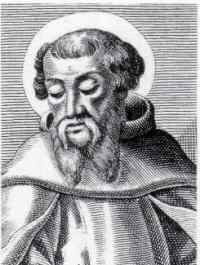
St. Irenaeus (c. 130–202), an early Christian Premillennialist.Premillennialism in Christian eschatology is the belief that Christ will literally reign on the earth for 1,000 years at his second coming. The doctrine is called premillennialism because it views the current age as prior to Christ’s kingdom. It is distinct from other forms of eschatology such as amillennialism, postmillennialism, and preterism which view the kingdom as figurative and non-temporal, or as currently occurring in history before Christ’s coming. Premillennialism is largely based upon a literal interpretation of Revelation 20:1-6 in the New Testament which describes Christ’s coming to the earth and subsequent reign at the end of an apocalyptic period of tribulation. It views this future age as a time of fulfillment for the prophetic hope of God’s people as given in the Old Testament.

Origin of the Term
Historically Christian premillennialism has also been referred to as "chiliasm" or "millenarianism". The theological term "premillennialism" did not come into general use until the mid-nineteenth century, a period when modern premillennialism was revived. Coining the word was "almost entirely the work of British and American Protestants and was prompted by their belief that the French and American Revolution (the French, especially) realized prophecies made in the books of Daniel and Revelation.”


More...

Saturday, August 18, 2007

Louis Pasteur

Louis PasteurLouis Pasteur (December 27, 1822 – September 28, 1895) was a French chemist best known for his remarkable breakthroughs in microbiology. His experiments confirmed the germ theory of disease, also reducing mortality from puerperal fever (childbed), and he created the first vaccine for rabies. He is best known to the general public for showing how to stop milk and wine from going sour - this process came to be called pasteurization. He is regarded as one of the three main founders of bacteriology, together with Ferdinand Cohn and Robert Koch. He also made many discoveries in the field of chemistry, most notably the asymmetry of crystals.

“He believed that the Genesis account that created life reproduces its own kind. He worked to deomonstrate the fallacy of spontaneous generation, which many continued to believe despite the work of Leeuwenhoek in the previous century”

Louis Jean Pasteur was born on December 27, 1822 in Dole in the Jura region of France and grew up in the town of Arbois. There he later had his house and laboratory, which is a Pasteur museum today. His father, Jean Pasteur, was a tanner and a veteran of the Napoleonic wars. Louis's aptitude was recognized by his college headmaster, who recommended that the young man apply for the École Normale Supérieure, which accepted him. After serving briefly as professor of physics at Dijon Lycée in 1848, he became professor of chemistry at Strasbourg University, where he met and courted Marie Laurent, daughter of the university's rector in 1849. They were married on May 29, 1849 and together they had five children, only two of whom survived to adulthood. Throughout his whole life, Louis Pasteur remained an ardent Catholic. A well-known quotation illustrating this is attributed to him: "I have the faith of a Breton peasant, and by the time I die I hope to have the faith of a Breton peasant's wife."

More...

Friday, August 17, 2007

Gregor Mendel

Gregor Johann MendelGregor Johann Mendel (July 20, 1822 – January 6, 1884) was a German-Czech Augustinian priest and scientist often called the "father of modern genetics" for his study of the inheritance of traits in pea plants. Mendel showed that the inheritance of traits follows particular laws, which were later named after him. The significance of Mendel's work was not recognized until the turn of the 20th century. Its rediscovery prompted the foundation of genetics.

As an Augustinian monk, Gregor Mendel was a Christian who belived in creationism.

Mendel was born into a German-speaking family in Heinzendorf, Silesia, then part of the Austrian Empire (now Hynčice in the Czech Republic), and was baptized two days later. During his childhood Mendel worked as a gardener, and as a young man attended the Philosophical Institute in Olomouc (Olmütz). In 1843 he entered the Augustinian Abbey of St. Thomas in Brno, (Brünn). Born Johann Mendel, he took the name Gregor upon entering monastic life. In 1851 he was sent to the University of Vienna to study, returning to his abbey in 1853 as a teacher, principally of physics.

Gregor Mendel, who is known as the "father of modern genetics", was inspired by both his professors at university and his colleagues at the monastery to study variation in plants. He commenced his study his monastery's experimental garden. Between 1856 and 1863 Mendel cultivated and tested some 29,000 pea plants. His experiments brought forth two generalizations which later became known as Mendel's Laws of Inheritance.


More...

Thursday, August 16, 2007

James Clerk Maxwell

James Clerk MaxwellJames Clerk Maxwell (13 June 1831 – 5 November 1879) was a Scottish mathematician and theoretical physicist. His most significant achievement was formulating a set of equations — eponymically named Maxwell's equations — that for the first time expressed the basic laws of electricity and magnetism in a unified fashion. He also developed the Maxwell distribution, a statistical means to describe aspects of the kinetic theory of gases. These two discoveries helped usher in the era of modern physics, laying the foundation for future work in such fields as special relativity and quantum mechanics. He is also known for creating the first true colour photograph in 1861.

“(The work of Maxwell) ... the most profound and the most fruitful that physics has experienced since the time of Newton.” —Albert Einstein, The Sunday Post

The majority of Maxwell's illustrious career took place at the University of Cambridge, where his investigations often made use of his mathematical aptitude, drawing on elements of geometry and algebra. With these skills, Maxwell was able to demonstrate that electric and magnetic fields travel through space, in the form of waves, and at the constant speed of light. Finally, in 1861 Maxwell wrote a four-part publication in the Philosophical Magazine called On Physical Lines of Force where he first proposed that light was in fact undulations in the same medium that is the cause of electric and magnetic phenomena.


More...

Wednesday, August 15, 2007

William Thompson

A photograph of William Thomson, likely from the late-19th century William Thomson, 1st Baron Kelvin, OM, GCVO, PC, PRS, FRSE, (26 June 1824 – 17 December 1907) was a mathematical physicist, engineer, and outstanding leader in the physical sciences of the 19th century. He did important work in the mathematical analysis of electricity and thermodynamics, and did much to unify the emerging discipline of physics in its modern form. He is widely known for developing the Kelvin scale of absolute temperature measurement. The title Baron Kelvin was given in honour of his achievements, and named after the River Kelvin, which flowed past his university in Glasgow, Scotland.

He also enjoyed a second career as a telegraph engineer and inventor, a career that propelled him into the public eye and ensured his wealth, fame and honour.

Thomson was a defender of Christian education, and he studied the Bible, its history, and the geography of the ancient world.

Thomson remained a devout believer in Christianity throughout his life: attendance at chapel was part of his daily routine, though he might not identify with fundamentalism if he were alive today. He saw his Christian faith as supporting and informing his scientific work, as is evident from his address to the annual meeting of the Christian Evidence Society, 23 May 1889.

More...

Tuesday, August 14, 2007

James Prescott Joule

James Joule - English physicist James Prescott Joule, FRS (December 24, 1818 – October 11, 1889) was an English physicist, born in Sale, near Manchester. Joule studied the nature of heat, and discovered its relationship to mechanical work (see energy). This led to the theory of conservation of energy, which led to the development of the first law of thermodynamics. The SI unit of work, the joule, is named after him. He worked with Lord Kelvin to develop the absolute scale of temperature, made observations on magnetostriction, and found the relationship between the flow of current through a resistance and the heat dissipated, now called Joule's law.

"I shall lose no time in repeating and extending these experiments, being satisfied that the grand agents of nature are by the Creator's fiat, indestructible; and that wherever mechanical force is expended, and exact equivalent of heat is always obtained."

"After knowledge of, and obedience to, the will of God, the next aim must be
to know something of His attributes of wisdom power and goodness as evidenced by His handiwork. It is evident that an acquaintance with natural laws means no
less than an acquaintance with the mind of God therein expressed."
-James Prescott Joule

More...

Monday, August 13, 2007

Michael Faraday

Michael Faraday holding a glass bar of the type he used in 1845 to show that magnetism can affect light. Detail of an engraving by Henry Adlard, based on an earlier photograph by Maull and Polyblank c 1857Michael Faraday, FRS (September 22, 1791 – August 25, 1867) was an English chemist and physicist (or natural philosopher, in the terminology of that time) who contributed significantly to the fields of electromagnetism and electrochemistry.

Faraday studied the magnetic field around a conductor carrying a DC electric current, and established the basis for the magnetic field concept in physics. He discovered electromagnetic induction, diamagnetism and electrolysis. He established that magnetism could affect rays of light and that there was an underlying relationship between the two phenomena.

His inventions of electromagnetic rotary devices formed the foundation of electric motor technology.

As a chemist, Faraday discovered chemical substances such as benzene, invented an early form of the bunsen burner and the system of oxidation numbers, and popularized terminology such as anode, cathode, electrode, and ion.

More...

Saturday, August 11, 2007

William Herschel

Sir Frederick William Herschel Sir Frederick William Herschel, FRS KH (15 November 1738-25 August 1822) was a German-born British astronomer and composer who became famous for discovering the planet Uranus. He also discovered infrared radiation and made many other discoveries in astronomy.

Biography
He was born Friedrich Wilhelm Herschel in Hanover, Germany, as one of ten children (of whom four died very young), of Isaac Herschel (1707-1767) a member of the Hanover Military Band. Although Isaac was of Jewish birth, his wife was Christian and the children were raised as Christians. In 1755 the Hanoverian Guards regiment, in whose band William and his brother Jacob were engaged, was ordered to England. At the time, the crowns of England and Hanover were united under George II. He learned English quickly and, at age nineteen, he changed his name to Frederick William Herschel.


"Herschel's pioneering work in astronomy was motivated by his belief in God as the Creator and the author of all natural laws." -Jeffrey Donley, Ph.D.

More...

Friday, August 10, 2007

Antony van Leeuwenhoek

Antony van LeeuwenhoekAntony (October 24, 1632 - August 30, 1723), full name Thonius Philips van Leeuwenhoek (pronounced 'vahn Laywenhook') was a Dutch tradesman and scientist from Delft, Netherlands. He is commonly known as "the Father of Microbiology". Born the son of a basket maker, at age 16 he secured an apprenticeship with a Scottish cloth merchant in Amsterdam. He is best known for his work on the improvement of the microscope and for his contributions towards the establishment of microbiology. Using his handcrafted microscopes he was the first to observe and describe single celled organisms, which he originally referred to as animalcules, and which we now refer to as microorganisms. He was also the first to record microscopic observations of muscle fibers, bacteria, spermatozoa and blood flow in capillaries (small blood vessels).
His faith in God and love for His creation undergirded his science. Along with others, he exposed the fallacy of spontaneous generation (abiogenesis), the superstitious belief that life sprung from material objects, such as raw meat "birthing" maggots.

During his lifetime van Leeuwenhoek ground over 500 optical lenses. He also created over 400 different types of microscopes, only nine of which still exist today. His microscopes were made of silver or copper metal frames holding hand-ground lenses. Those that have survived the years are able to magnify up to 275 times. It is suspected, though, that van Leeuwenhoek possessed some microscopes that could magnify up to 500 times. Although he has been widely regarded as a dilettante or amateur, his scientific research was of remarkably high quality.


More...

Thursday, August 09, 2007

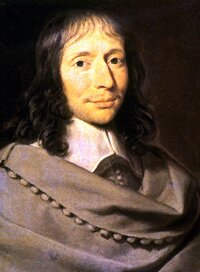
Blaise Pascal

Blaise PascalBlaise Pascal (June 19, 1623–August 19, 1662) was a French mathematician, physicist, and religious philosopher. He was a child prodigy who was educated by his father. Pascal's earliest work was in the natural and applied sciences where he made important contributions to the construction of mechanical calculators, the study of fluids, and clarified the concepts of pressure and vacuum by generalizing the work of Evangelista Torricelli. Pascal also wrote powerfully in defense of the scientific method.

He was a mathematician of the first order. Pascal helped create two major new areas of research. He wrote a significant treatise on the subject of projective geometry at the age of sixteen and corresponded with Pierre de Fermat from 1654 and later on probability theory, strongly influencing the development of modern economics and social science.

Following a mystical experience in late 1654, he abandoned his scientific work and devoted himself to philosophy and theology. His two most famous works date from this period: the Lettres provinciales and the Pensées. However, he had suffered from ill-health throughout his life and his new interests were ended by his early death two months after his 39th birthday.


More...

Wednesday, August 08, 2007

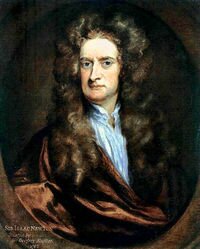
Isaac Newton

Newton in 1702. Portrait by Godfrey KnellerSir Isaac Newton, (4 January 1643 – 31 March 1727) [ OS: 25 December 1642 – 20 March 1727] was an English physicist, mathematician, astronomer, natural philosopher, and alchemist, regarded by many as the greatest figure in the history of science. His treatise Philosophiae Naturalis Principia Mathematica, published in 1687, described universal gravitation and the three laws of motion, laying the groundwork for classical mechanics. By deriving Kepler's laws of planetary motion from this system, he was the first to show that the motion of objects on Earth and of celestial bodies are governed by the same set of natural laws. The unifying and predictive power of his laws was central to the scientific revolution, the advancement of heliocentrism, and the broader acceptance of the notion that rational investigation can reveal the inner workings of nature.

In mechanics, Newton also markedly enunciated the principles of conservation of momentum and angular momentum. In optics, he invented the reflecting telescope and developed a theory of colour based on the observation that a prism decomposes white light into a visible spectrum. Newton notably argued that light is composed of particles. He also formulated an empirical law of cooling, studied the speed of sound, and proposed a theory of the origin of stars. In mathematics, Newton shares the credit with Gottfried Leibniz for the development of calculus. He also demonstrated the generalized binomial theorem, developed the so-called "Newton's method" for approximating the zeroes of a function, and contributed to the study of power series.


French mathematician Joseph-Louis Lagrange often said that Newton was the greatest genius who ever lived, and once added that he was also "the most fortunate, for we cannot find more than once a system of the world to establish." English poet Alexander Pope was moved by Newton's accomplishments to write the famous epitaph:


“ Nature and nature's laws lay hid in night; God said "Let Newton be" and
all was light. ”


More...

Tuesday, August 07, 2007

Johannes Kepler

Portrait of Johannes KeplerJohannes Kepler (December 27, 1571 – November 15, 1630) was a German Lutheran mathematician, astronomer and astrologer, and a key figure in the 17th century astronomical revolution. He is best known for his laws of planetary motion, based on his works Astronomia nova and Harmonice Mundi; Kepler's laws provided one of the foundations of Isaac Newton's theory of universal gravitation. Before Kepler's laws, planets' orbits were believed to be circular. Kepler's laws of planetary motion proved that the planets' orbits were actually elliptical.

Through his career Kepler was a mathematics teacher at a Graz seminary school (later the University of Graz, Austria), an assistant to Tycho Brahe, court mathematician to Emperor Rudolf II, mathematics teacher in Linz, Austria, and adviser to General Wallenstein.

He also did fundamental work in the field of optics and helped to legitimize the telescopic discoveries of his contemporary Galileo Galilei.

Kepler lived in an era when there was no clear distinction between astronomy and astrology, while there was a strong division between astronomy (a branch of mathematics within the liberal arts) and physics (a branch of the more prestigious discipline of philosophy); he also incorporated religious arguments and reasoning into his work, such that the basis for many of his most important contributions was essentially theological.

More...

Monday, August 06, 2007

Nicolaus Copernicus

The astronomer Copernicus: Conversation with God. Painting by Jan MatejkoNicolaus Copernicus (February 19, 1473 – May 24, 1543) was the astronomer who formulated the first modern heliocentric theory of the solar system. His epochal text, De revolutionibus orbium coelestium (On the Revolutions of the Celestial Spheres), is often conceived as the starting point of modern astronomy, as well as a central and defining epiphany in the history of all science.

Among the great polymaths of the Scientific Revolution, Copernicus was a mathematician, astronomer, jurist, physician, classical scholar, Catholic cleric, governor, administrator, diplomat, economist. Amid these extensive responsibilities, astronomy served as no more than an avocation. Nonetheless, his conception that the sun (rather than the Earth) at the center of the solar system is considered among the most important landmarks in the history of science.


More...

Saturday, August 04, 2007

Biblical archaeology

Biblical archaeology involves the recovery and scientific investigation of the material remains of past cultures that can illuminate the periods and descriptions in the Bible. As with the historical records from any other civilization, the manuscripts must be compared to other accounts from contemporary societies in Europe, Mesopotamia, and Africa; additionally, records from neighbors must be compared with them. The scientific techniques employed are those of archaeology in general including excavations as well as chance discoveries.

By contrast Near Eastern archaeology is simply the archaeology of the Ancient Near East without any particular consideration of how its discoveries relate to the Bible.
Biblical archaeology is a controversial subject with differing opinions on what its purpose and goals are or should be.

Biblical Archaeology began after publication by Edward Robinson (American professor of Biblical literature; 1794-1863) of his travels through Palestine during the first half of the 19th century (a time when the oldest complete Hebrew scripture only dated to the Middle Ages), which highlighted similarities between modern Arabic place-names and Biblical city names.


More...

Friday, August 03, 2007

Plagues of Egypt

Moses and Aaron before Pharoah by Gustov DoréThe Plagues of Egypt (Hebrew: מכות מצרים, Makot Mitzrayim), the Biblical Plagues or the Ten Plagues (עשר המכות, Eser Ha-Makot) are the ten calamities inflicted upon Egypt by God in the Biblical story recounted the book of Exodus, chapters 7 - 12, in order to convince Pharaoh (possibly Ramesses II, making the pharaoh of the Oppression Horemheb) to let the Israelite slaves leave.

The 10 plagues as they appear in the Torah are:


  1. (Exodus 7:14-25) rivers and other water sources turned to blood ('Dam')
  2. (Exodus 7:26-8:11) amphibians (commonly believed to be frogs) ('Tsfardeia')
  3. (Exodus 8:12-15) lice ('Kinim')
  4. (Exodus 8:16-28) Either flies, wild animals or beetles ('Arov')
  5. (Exodus 9:1-7) disease on livestock ('Dever')
  6. (Exodus 9:8-12) unhealable boils ('Shkhin')
  7. (Exodus 9:13-35) hail mixed with fire ('Barad')
  8. (Exodus 10:1-20) locusts ('Arbeh')
  9. (Exodus 10:21-29) darkness ('Choshech')
  10. (Exodus 11:1-12:36) death of the firstborn ('Makat Bechorot')


More...
Thursday, August 02, 2007

Masoretic Text

Nash Papyrus (2nd century BCE) contains a portion of the pre-Masoretic Text, specifically the Ten Commandments and the Shema Yisrael prayer The Masoretic Text (MT) is the Hebrew text of the Jewish Bible (Tanakh). It defines not just the books of the Jewish canon, but also the precise letter-text of the biblical books in Judaism, as well as their vocalization and accentuation for both public reading and private study. The MT is also widely used as the basis for translations of the Old Testament in Protestant Bibles, and in recent decades also for Catholic Bibles.

The MT was primarily copied, edited and distributed by a group of Jews known as the Masoretes between the seventh and tenth centuries CE. Though the consonants differ little from the text generally accepted in the early second century, it has numerous differences of both little and great significance when compared to (extant 4th century) versions of the Septuagint, originally a Greek translation (around 300 BCE) of the Hebrew Scriptures in popular use in Palestine during the common era and often quoted in the second part of the Christian Bible (known as the New Testament).

The Hebrew word mesorah (מסורה, alt. מסורת) refers to the transmission of a tradition. In a very broad sense it can refer to the entire chain of Jewish tradition (see Oral law), but in reference to the masoretic text the word mesorah has a very specific meaning: the diacritic markings of the text of the Hebrew Bible and concise marginal notes in manuscripts (and later printings) of the Hebrew Bible which note textual details, usually about the precise spelling of words.

More...

Wednesday, August 01, 2007

Biblical inerrancy

Title page for the 1582 Douai-Rheims New Testament.Biblical inerrancy is the belief that the Bible is without error. The belief takes several forms, ranging from Biblical literalism (the belief that the Bible is true in every word) to the belief that Biblical texts require interpretation in order to be understood correctly.

The theological basis of the belief, in its simplest form, is that as God is infallible, the Bible, as the Word of God, must also be free from error. A more nuanced restatement of the same idea is that God inspired the authors of the Bible without marginalizing their personal concerns or personalities, and so preserved the texts from error.

Protestant churches, unlike Eastern and Roman churches, reject that there is an infallible authoritative tradition that is held over Scripture. Some Protestants hold that the Bible confirms its own infallibility, pointing out that Jesus frequently quotes Scripture as if it was meant to be taken historically rather than entirely allegorically, and citing John 10:35 "the Scripture cannot be broken," they conclude that if the Bible is not inerrant, then Jesus is a liar.

Roman Catholic teaching holds that the resurrection of Christ affirms his divinity, and Christ in turn appointed the Pope himself, or the body of Bishops led by the Pope, guided by the Holy Spirit, to offer infallible guidance on questions of faith and morals whose answers are found within the Word of God, comprised of both Sacred Tradition and Sacred Scripture. But liberal Roman Catholics do not affirm that the Bible is without error, even when interpreted correctly by the Pope or tradition.


The Eastern Orthodox Church also believes in unwritten Tradition and the written Scriptures. However, they hold that the infallibility or authority of the Magisterium belongs to all the bishops, not just the Roman bishop.

More...
 

Subscribe


LifeNews.com

Desiring God Blog

Youth for Christ International