
Showing posts with label Biblical archaeology. Show all posts

Sunday, February 22, 2009

Biblical archaeology

An aerial view of the Tel, Apollonia IsraelBiblical archaeology involves the recovery and scientific investigation of the material remains of past cultures that can illuminate the periods and descriptions in the Bible. As with the historical records from any other civilization, the manuscripts must be compared to other accounts from contemporary societies in Europe, Mesopotamia, and Africa; additionally, records from neighbors must be compared with them. The scientific techniques employed are those of archaeology in general including excavations as well as chance discoveries.

By contrast Near Eastern archaeology is simply the archaeology of the Ancient Near East without any particular consideration of how its discoveries relate to the Bible.

Biblical archaeology is a controversial subject with differing opinions on what its purpose and goals are or should be.

More...

Tuesday, October 07, 2008

Biblical archaeology

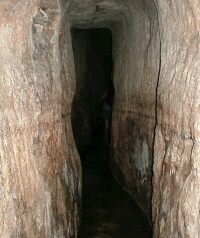
Hezekiah’s tunnel is a tunnel that was dug underneath Ophel in Jerusalem about 701 BC during the reign of King Hezekiah.Biblical archaeology involves the recovery and scientific investigation of the material remains of past cultures that can illuminate the periods and descriptions in the Bible. As with the historical records from any other civilization, the manuscripts must be compared to other accounts from contemporary societies in Europe, Mesopotamia, and Africa; additionally, records from neighbors must be compared with them. The scientific techniques employed are those of archaeology in general including excavations as well as chance discoveries.

By contrast Near Eastern archaeology is simply the archaeology of the Ancient Near East without any particular consideration of how its discoveries relate to the Bible.

Biblical archaeology is a controversial subject with differing opinions on what its purpose and goals are or should be.

Biblical Archaeology began after publication by Edward Robinson (American professor of Biblical literature; 1794-1863) of his travels through Palestine during the first half of the 19th century (a time when the oldest complete Hebrew scripture only dated to the Middle Ages), which highlighted similarities between modern Arabic place-names and Biblical city names.

The Palestine Exploration Fund sponsored detailed surveys led by Charles Warren during the late 1860s (initially financed by Angela Georgina Burdett-Coutts in 1864 to improve Jerusalem's sanitary conditions), which culminated with the formal publication of "The Survey of Western Palestine" from 1871-1877.

More...

Friday, July 11, 2008

William F. Albright

William F. AlbrightWilliam Foxwell Albright (May 24, 1891–September 19/September 20, 1971) was an American Orientalist, pioneer archaeologist, biblical scholar, linguist and expert on ceramics. From the early twentieth century until his death, he was the dean of biblical archaeologists and the universally acknowledged founder of the Biblical archaeology movement. His student George Ernest Wright followed in his footsteps as the leader of that movement, while others, notably Frank Moore Cross and David Noel Freedman, became international leaders in the study of the Bible and the ancient Near East, including Northwest Semitic epigraphy and paleography. Nevertheless, although Albright is assured of a place in the history of the development of Middle Eastern archaeology, his concepts and conclusions, especially those relating to biblical archaeology, have been overturned by developments after his death.

Albright argued that the Abraham, Isaac, and Jacob were real historical figures, and he believed that Joshua's exploits were historical as well. He insisted that "as a whole, the picture in Genesis is historical, and there is no reason to doubt the general accuracy of the biographical details."

In 1923 he made the first significant excavation of a tumulus near Jerusalem--possibly the site where an ancient king of Judah was memorialized. Another noteworthy contribution he made to the field of Biblical archaeology was his study of the LMLK seals and the impact it had on other researchers from 1925-1960 (Grena, 2004, pp. 149-78).

More...

Saturday, May 10, 2008

archaeology of Israel

The Old City of Jerusalem in the early 20th century. The Jewish quarter is at the bottom of the image. The two large domes are the Hurva Synagogue and the Tiferes Yisrael Synagogue, both of which were destroyed by the Jordanians in 1948.The archaeology of Israel is a national passion that also attracts considerable international interest on account of the region's Biblical links.

Each university in Israel possesses a strong department or institute of archaeology and is involved in research, excavation, conservation and training.

Israeli archaeologists frequently achieve a high profile, both at home and internationally.

Yigael Yadin, one-time Deputy Prime Minister of Israel, was one of the more influential amongst the older generation of Israeli archaeologists before his death. Eilat Mazar, granddaughter of the pioneering Israeli archaeologist Benjamin Mazar, has emerged as a frequent spokesperson for concerns regarding the archaeology of the Temple Mount in Jerusalem.

Stemming from its Biblical possibilities, controversy remains a hallmark of Israeli archaeology. Recent issues have centered on the veracity of such artefacts as the Tel Dan Stela, the Jehoash Inscription and the James Ossuary, as well as the validity of whole chronological schemes. In regard to the latter, Amihai Mazar and Israel Finkelstein represent the leading lights in a debate regarding the nature and chronology of the United Monarchy.

Excavation in Israel continues at a relatively rapid pace and is conducted according to generally high standards. Excavators return each year to a number of key sites that have been selected for their potential scientific and cultural interest.

More...

Sunday, February 17, 2008

biblical studies

The Gutenberg Bible displayed by the United States Library of CongressFocused on the interpretation and exegesis of the bible.

Biblical studies is the academic study of the Judeo-Christian Bible. Christianity traditionally includes the New Testament and Old Testament, sometimes called the "Scriptures."


Judaism includes only the Hebrew Bible (the first five books of which are called the Torah or Tanakh in Hebrew). Biblical studies is a branch of theology, but also draws on the disciplines of history, literary criticism, philology, and increasingly the social sciences. Practitioners of Biblical Studies do not necessarily have faith commitment to the texts they study.

In Judaism

Biblical studies among Jews in a secular academic setting is fairly new. Historically, and for those Jews maintaining Jewish traditions (particularly the Haredi Jews and Hasidic Jews), the term "Bible Study" is not used, rather the term of choice was, and remains, "Torah Study", which included the study of Torah, Tanakh, Mishnah, Talmud, or Jewish law, Midrashic commentators and rabbinic literature. Jews have traditionally done their religious studies at home with their parents, or institutionally in a local yeshiva (larger Talmudic school), beth midrash (a smaller school), a kollel (post-graduate school) and even in synagogue on a daily basis.

Modern academic-type institutions where Bible studies are conducted in non-traditional fashion, meaning in modern academic style, for Jewish students are the Jewish Theological Seminary (Conservative), some classes at Yeshiva University (Modern Orthodox) in the United States, and in Israel at all its major universities such as Hebrew University (secular), Tel Aviv University (secular) and some courses at Bar Ilan University (Religious Zionism).

More...

Thursday, February 14, 2008

Historicity of the Bible

Introduction

Photo of Pontius Pilate Inscription. Pontius Pilate was governor of Judea in 26 BCE by the Roman Emperor, Tiberius Caesar, who succeeded Augustus in AD 14, Pilate arrived and made his official residence in Caesarea Maritima, the Roman capital of Judea. Pilate was the 5th procurator of Judea. The province of Judea, formerly the kingdom of Archelaus, was formed in 6 AD when Archelaus was exiled and his territory transformed into a Roman province. Although it included Samaria and Idumaea, the new province was known simply as Judea or Judaea. It generally covered the Southern half of Palestine, including Samaria. Judea was an imperial province (i.e. under the direct control of the emperor), and was governed by a procurator.All historians of the ancient Near East are confronted with the question of the historicity (historical actuality) of the account of the Bible. The text provides a powerful and evocative account of two states, the Kingdom of Israel and Kingdom of Judah, and their contact with a range of neighbouring peoples, from their formation to their disappearance, in the eighth and sixth centuries. It also presents a reconstruction of the earlier histories of the region, supposedly from the time of the Creation of the World, and a Universal deluge, down to the supposed creation of a unified state at the time of the monarchs, David and Solomon. There are thousands of works examining the historical nature or otherwise of this material, examining whether or not it is possible to depend upon this material for historical reconstructions of these areas in these periods, and to attempt to identify which passages of the Biblical account are most reliable.

These views range from those which adopt an almost complete paraphrase of the Biblical material, to those who advocate its almost complete rejection as having almost no historically useful information at all. Those involved in this analysis have often been engaged in bitter disputes, which cannot, by the nature of the Biblical record be resolved from within the Biblical tradition.

More...

Saturday, August 04, 2007

Biblical archaeology

Biblical archaeology involves the recovery and scientific investigation of the material remains of past cultures that can illuminate the periods and descriptions in the Bible. As with the historical records from any other civilization, the manuscripts must be compared to other accounts from contemporary societies in Europe, Mesopotamia, and Africa; additionally, records from neighbors must be compared with them. The scientific techniques employed are those of archaeology in general including excavations as well as chance discoveries.
By contrast Near Eastern archaeology is simply the archaeology of the Ancient Near East without any particular consideration of how its discoveries relate to the Bible.
Biblical archaeology is a controversial subject with differing opinions on what its purpose and goals are or should be.

Biblical Archaeology began after publication by Edward Robinson (American professor of Biblical literature; 1794-1863) of his travels through Palestine during the first half of the 19th century (a time when the oldest complete Hebrew scripture only dated to the Middle Ages), which highlighted similarities between modern Arabic place-names and Biblical city names.


More...


Subscribe


LifeNews.com

Desiring God Blog

Youth for Christ International