Showing posts with label William F. Albright. Show all posts

Wednesday, January 20, 2010

Biblical Archaeology

Biblical archaeology involves the recovery and scientific investigation of the material remains of past cultures that can illuminate the periods and descriptions in the Bible. As with the historical records from any other civilization, the manuscripts must be compared to other accounts from contemporary societies in Europe, Mesopotamia, and Africa; additionally, records from neighbors must be compared with them. The scientific techniques employed are those of archaeology in general including excavations as well as chance discoveries.

By contrast Near Eastern archaeology is simply the archaeology of the Ancient Near East without any particular consideration of how its discoveries relate to the Bible.

More...

Tuesday, July 28, 2009

William F. Albright

William F. AlbrightWilliam Foxwell Albright (May 24, 1891–September 19/September 20, 1971) was an American Orientalist, pioneer archaeologist, biblical scholar, linguist and expert on ceramics. From the early twentieth century until his death, he was the dean of biblical archaeologists and the universally acknowledged founder of the Biblical archaeology movement. His student George Ernest Wright followed in his footsteps as the leader of that movement, while others, notably Frank Moore Cross and David Noel Freedman, became international leaders in the study of the Bible and the ancient Near East, including Northwest Semitic epigraphy and paleography. Nevertheless, although Albright is assured of a place in the history of the development of Middle Eastern archaeology, his concepts and conclusions, especially those relating to biblical archaeology, have been overturned by developments after his death.

Albright argued that the Abraham, Isaac, and Jacob were real historical figures, and he believed that Joshua's exploits were historical as well. He insisted that "as a whole, the picture in Genesis is historical, and there is no reason to doubt the general accuracy of the biographical details."

Tuesday, October 07, 2008

Biblical archaeology

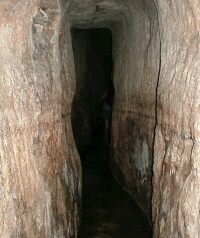
Hezekiah’s tunnel is a tunnel that was dug underneath Ophel in Jerusalem about 701 BC during the reign of King Hezekiah.Biblical archaeology involves the recovery and scientific investigation of the material remains of past cultures that can illuminate the periods and descriptions in the Bible. As with the historical records from any other civilization, the manuscripts must be compared to other accounts from contemporary societies in Europe, Mesopotamia, and Africa; additionally, records from neighbors must be compared with them. The scientific techniques employed are those of archaeology in general including excavations as well as chance discoveries.

By contrast Near Eastern archaeology is simply the archaeology of the Ancient Near East without any particular consideration of how its discoveries relate to the Bible.

Biblical archaeology is a controversial subject with differing opinions on what its purpose and goals are or should be.

Biblical Archaeology began after publication by Edward Robinson (American professor of Biblical literature; 1794-1863) of his travels through Palestine during the first half of the 19th century (a time when the oldest complete Hebrew scripture only dated to the Middle Ages), which highlighted similarities between modern Arabic place-names and Biblical city names.

The Palestine Exploration Fund sponsored detailed surveys led by Charles Warren during the late 1860s (initially financed by Angela Georgina Burdett-Coutts in 1864 to improve Jerusalem's sanitary conditions), which culminated with the formal publication of "The Survey of Western Palestine" from 1871-1877.

More...

Friday, July 11, 2008

William F. Albright

William F. AlbrightWilliam Foxwell Albright (May 24, 1891–September 19/September 20, 1971) was an American Orientalist, pioneer archaeologist, biblical scholar, linguist and expert on ceramics. From the early twentieth century until his death, he was the dean of biblical archaeologists and the universally acknowledged founder of the Biblical archaeology movement. His student George Ernest Wright followed in his footsteps as the leader of that movement, while others, notably Frank Moore Cross and David Noel Freedman, became international leaders in the study of the Bible and the ancient Near East, including Northwest Semitic epigraphy and paleography. Nevertheless, although Albright is assured of a place in the history of the development of Middle Eastern archaeology, his concepts and conclusions, especially those relating to biblical archaeology, have been overturned by developments after his death.

Albright argued that the Abraham, Isaac, and Jacob were real historical figures, and he believed that Joshua's exploits were historical as well. He insisted that "as a whole, the picture in Genesis is historical, and there is no reason to doubt the general accuracy of the biographical details."

In 1923 he made the first significant excavation of a tumulus near Jerusalem--possibly the site where an ancient king of Judah was memorialized. Another noteworthy contribution he made to the field of Biblical archaeology was his study of the LMLK seals and the impact it had on other researchers from 1925-1960 (Grena, 2004, pp. 149-78).

More...
 

Subscribe


LifeNews.com

Desiring God Blog

Youth for Christ International