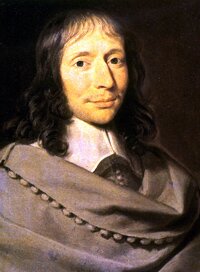
 Pascal's Wager (or Pascal's Gambit) is the application by the French philosopher Blaise Pascal of decision theory to the belief in God. It was set out in the Pensées, a posthumous collection of notes made by Pascal towards his unfinished treatise on Christian apologetics.
The Wager posits that it is a better "bet" to believe that God exists than not to believe, because the expected value of believing (which Pascal assessed as infinite) is always greater than the expected value of not believing. In Pascal's assessment, it is inexcusable not to investigate this issue:
Before entering into the proofs of the Christian religion, I find it necessary to point out the sinfulness of those men who live in indifference to the search for truth in a matter which is so important to them, and which touches them so nearly.Variations of this argument may be found in other religious philosophies, such as Islam, Hinduism, and Buddhism. Pascal's Wager is also similar in structure to the precautionary principle.
More...

