Showing posts with label Joshua. Show all posts

Thursday, May 06, 2010

Promised Land

According to the Bible, the Land of Israel (Hebrew: Eretz Yisrael) was promised to the descendants of Hebrew patriarchs Abraham, Isaac, and Jacob by God, making it the Promised land. The concept is frequently used symbolically by Christians, especially in hymnody as a reference to Heaven, or to a new land, such as North America colonized by the Pilgrims. In the Bible, particularly in Genesis, Deuteronomy and Joshua, the Land of Israel was promised as an everlasting possession.

Abraham
'On that day, God made a covenant with Abram, saying: "To your descendants I have given this land, from the river of Egypt as far as the great river the Euphrates. The land of the Kenites, Kenizites, Kadmonites; the Chitties, Perizites, Refaim; the Emorites, Canaanites, Gigashites and Yevusites." ' (Genesis 15:18-21)

More...

Wednesday, February 03, 2010

Joshua

Joshua or Yehoshúa (יְהוֹשֻׁעַ "The LORD of/is help/court") is a biblical character, much of whose life is described in the biblical Book of Joshua. The lack of a vav after the shin would normally indicate a pronunciation of Yehoshēa`, and in three places he is actually called Hoshēa. In Greek he is called Ιησούς (Iēsoûs) του Ναυή, the same as the name of Jesus of Nazareth and others bearing the Hebrew name Yēshua`. He is a historical figure, and would have lived sometime between the 18th century BC and the late 13th century BC.

Joshua was the son of Nun, of the tribe of Ephraim and the successor to Moses as the leader of Israel. See also History of ancient Israel and Judah. He is called Jehoshua in Num. 13:16 (A.V.), and Jesus in Acts 7:45 and Heb. 4:8 (R.V., Joshua).

He was born in Egypt, and was probably of the age of Caleb, with whom he is generally associated. He shared in all the events of the Exodus, and held the place of commander of the host of the Israelites at their great battle against the Amalekites in Rephidim (Ex. 17:8-16).

He became Moses' minister, and accompanied him part of the way when he ascended sount sinai to receive the (Exodus 32:17). He was also one of the twelve spies who were sent on by Moses to explore the land of Canaan (Num. 13:16, 17), and only he and Caleb gave an encouraging report.

Before Moses died, he appointed Joshua as his successor. The people were encamped at Shittim when he assumed the command before crossing the Jordan River. Upon Joshua devolved a twofold duty: to conquer the land, and to apportion it among the tribes (see tribes of Israel). According to the Book of Joshua, God encouraged him to be strong and to cling to the Law, which was never to "depart out of his mouth." After enlisting the cooperation of the kindred east Jordanic tribes, his first concern was to spy out Jericho. On receiving the report of his emissaries he gave the necessary instructions for the crossing by the Israelites of the Jordan River. With the Ark of the Covenant carried by the priests in the van, on the tenth day of the first month of the forty-first year after the Exodus the Israelites set out to conquer the land.

More...

Tuesday, July 08, 2008

Joshua

Moses names Joshua his successorJoshua or Yehoshúa (יְהוֹשֻׁעַ "The LORD of/is help/court") is a Biblical character, much of whose life is described in the biblical Book of Joshua. The lack of a vav after the shin would normally indicate a pronunciation of Yehoshēa`, and in three places he is actually called Hoshēa. In Greek he is called Ιησούς (Iēsoûs) του Ναυή, the same as the name of Jesus of Nazareth and others bearing the Hebrew name Yēshua`. He is a historical figure, and would have lived sometime between the 18th century BC and the late 13th century BC.

Joshua was the son of Nun, of the tribe of Ephraim and the successor to Moses as the leader of Israel. See also History of ancient Israel and Judah. He is called Jehoshua in Num. 13:16 (A.V.), and Jesus in Acts 7:45 and Heb. 4:8 (R.V., Joshua).

He was born in Egypt, and was probably of the age of Caleb, with whom he is generally associated. He shared in all the events of the Exodus, and held the place of commander of the host of the Israelites at their great battle against the Amalekites in Rephidim (Ex. 17:8-16).

He became Moses' minister, and accompanied him part of the way when he ascended Mount Sinai to receive the (Exodus 32:17). He was also one of the twelve spies who were sent on by Moses to explore the land of Canaan (Num. 13:16, 17), and only he and Caleb gave an encouraging report.

More...

Friday, April 18, 2008

Galilee

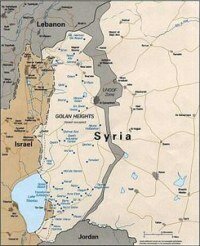
political map 1 of the Sea of Galilee (Golan Heights) region todayGalilee (Arabic al-jaleel الجليل, Hebrew hagalil הגליל), meaning "circuit", is a large area overlapping with much of the North District of Israel. It is traditionally divided into three areas:
  1. Upper Galilee,
  2. Lower Galilee and
  3. Western Galilee.
Galilee embraces more than one-third of present-day Israel, extending "from Dan on the north, at the base of Mount Hermon, to the ridges of Mount Carmel and Gilboa on the south, and from the Jordan valley on the east away across the splendid plains of Jezreel and Akko to the shores of the Mediterranean on the west."

The Western Galilee, also called the "Northern Coastal Plain" strays from north of Haifa up to Rosh Hanikra in the border between Israel and Lebanon.


The Lower Galilee strays from Mount Carmel and Mount Gilboa ridge in the south to the Beit HaKerem Valley in the north. Its eastern border is the Jordan River.


The Upper Galilee strays from Beit HaKerem Valley in the south to the Lebanese border in the north. Its eastern border is the Sea of Galilee and the mountains of the Golan Heights. The "Finger of the Galilee" (Etzba ha-Galil) is a region of the upper Galilee and contains the towns Metula and Qiriyat Shemona and the rivers of Dan and Banias.

Most of the Galilee consists of mountainous terrain, at heights of about 500-700 meters. There are several high mountain such as Mount Tabor. The relatively low tempartures and the large amounts of rain pouring every year made the Galilee a center of blossom and wildlife. The streams and waterfalls (mainly in the upper Galilee), along with vast fields of green and colorful flowers made it a popular tourist attraction in Israel.

At and before the time of Jesus, the region of the Galilee had been populated by Gentiles, people who were of neither Jewish nor Samaritan ancestry. Galilee was not part of Judea proper but at times was under Judean control. Galilee was separated from it by a sliver of the Gentile Decapolis and by the ethnically mixed transitional region Samaria. The cultural and fundamentalist, religious Jews (Judeans), considered the region to be lower than the half-breeds of Samaria and therefore, morally, spiritually and physically "unclean".

More...

Saturday, March 03, 2007

Joshua

Moses names Joshua his successorJoshua or Yehoshúa (יְהוֹשֻׁעַ "The LORD of/is help/court") is a Biblical character, much of whose life is described in the Book of Joshua. The lack of a vav after the shin would normally indicate a pronunciation of Yehoshēa`, and in three places he is actually called Hoshēa. In Greek he is called Ιησούς (Iēsoûs) του Ναυή, the same as the name of Jesus of Nazareth and others bearing the Hebrew name Yēshua`. He is a historical figure, and would have lived sometime between the 18th century BC and the late 13th century BC.

Joshua was the son of Nun, of the tribe of Ephraim and the successor to Moses as the leader of Israel. See also History of ancient Israel and Judah. He is called Jehoshua in Num. 13:16 (A.V.), and Jesus in Acts 7:45 and Heb. 4:8 (R.V., Joshua).


He was born in Egypt, and was probably of the age of Caleb, with whom he is generally associated. He shared in all the events of the Exodus, and held the place of commander of the host of the Israelites at their great battle against the Amalekites in Rephidim (Ex. 17:8-16).


He became Moses' minister, and accompanied him part of the way when he ascended Mount Sinai to receive the (Exodus 32:17). He was also one of the twelve spies who were sent on by Moses to explore the land of Canaan (Num. 13:16, 17), and only he and Caleb gave an encouraging report.


More...
 

Subscribe


LifeNews.com

Desiring God Blog

Youth for Christ International