Showing posts with label Joseph of Arimathea. Show all posts

Wednesday, October 19, 2011

Joseph of Arimathea

According to the Gospels, Joseph of Arimathea was the man who donated his own prepared tomb for the burial of Jesus after Jesus was crucified. A native of Arimathea, he was apparently a man of wealth, and a member of the Sanhedrin (which is the way bouleutēs, literally "senator", is interpreted in Matthew 27:57 and Luke 23:50). Joseph was an "honourable counsellor, which also waited for the kingdom of God" (Mark 15:43):
43 Joseph of Arimathaea, an honourable counsellor, which also waited for the kingdom of God, came, and went in boldly unto Pilate, and craved the body of Jesus.
The Greek word for bold used in the above is τολμάω tolmaō, "not to dread or shun through fear."

Pontius Pilate, who was reassured by a centurion that the death had really taken place, allowed Joseph's request. Joseph immediately purchased fine linen (Mark 15:46) and proceeded to Golgotha to take the body down from the cross. There, assisted by Nicodemus, he took the body and wrapped it in the fine linen, sprinkling it with the myrrh and aloes which Nicodemus had brought (John 19:39).

The body was then conveyed to a new tomb that had been hewn for Joseph himself out of a rock in his garden nearby. There they laid it, in the presence of Mary Magdalene, Mary, the mother of Jesus, and other women, and rolled a great stone to the entrance, and departed (Luke 23:53, 55). This was done speedily, "for the Sabbath was drawing on".
53 Then he took it down, wrapped it in linen cloth and placed it in a tomb cut in the rock, one in which no one had yet been laid.

Joseph of Arimathea is venerated as a saint by the Catholic and Eastern Orthodox Churches. His feast-day is March 17 among Latins, and July 31 in the East. He appears in some early New Testament apocrypha, and a series of legends grew around him during the Middle Ages, which tied him to Britain and the Holy Grail.
More...

Tuesday, April 06, 2010

Joseph of Arimathea

Joseph of Arimathea, according to the Gospels, was the man who donated his own prepared tomb for the burial of Jesus after Jesus was crucified. A native of Arimathea, he was apparently a man of wealth, and a member of the Sanhedrin (which is the way bouleutēs, literally "senator", is interpreted in Matthew 27:57 and Luke 23:50). Joseph was an "honourable counsellor, who waited (or "was searching" which is not the same thing) for the kingdom of God" (Mark, 15:43). As soon as he heard the news of Jesus' death, he "went in boldly" (literally "having summoned courage, he went") "unto Pilate, and craved the body of Jesus."

Pontius Pilate, who was reassured by a centurion that the death had really taken place, allowed Joseph's request. Joseph immediately purchased fine linen (Mark 15:46) and proceeded to Golgotha to take the body down from the cross. There, assisted by Nicodemus, he took the body and wrapped it in the fine linen, sprinkling it with the myrrh and aloes which Nicodemus had brought (John 19:39).

More...

Sunday, March 08, 2009

Joseph of Arimathea

Jesus being taken down from the cross by Joseph of ArimatheaJoseph of Arimathea, according to the Gospels, was the man who donated his own prepared tomb for the burial of Jesus after Jesus was crucified. A native of Arimathea, he was apparently a man of wealth, and a member of the Sanhedrin (which is the way bouleutēs, literally "senator", is interpreted in Matthew 27:57 and Luke 23:50). Joseph was an "honourable counsellor, who waited (or "was searching" which is not the same thing) for the kingdom of God" (Mark, 15:43). As soon as he heard the news of Jesus' death, he "went in boldly" (literally "having summoned courage, he went") "unto Pilate, and craved the body of Jesus."

Pontius Pilate, who was reassured by a centurion that the death had really taken place, allowed Joseph's request. Joseph immediately purchased fine linen (Mark 15:46) and proceeded to Golgotha to take the body down from the cross. There, assisted by Nicodemus, he took the body and wrapped it in the fine linen, sprinkling it with the myrrh and aloes which Nicodemus had brought (John 19:39).

The body was then conveyed to a new tomb that had been hewn for Joseph himself out of a rock in his garden nearby. There they laid it, in the presence of Mary Magdalene, Mary, the mother of Jesus, and other women, and rolled a great stone to the entrance, and departed (Luke 23:53, 55). This was done speedily, "for the Sabbath was drawing on".

More...

Tuesday, January 22, 2008

Joseph of Arimathea

Jesus being taken down from the cross by Joseph of ArimatheaJoseph of Arimathea, according to the Gospels, was the man who donated his own prepared tomb for the burial of Jesus after Jesus was crucified. A native of Arimathea, he was apparently a man of wealth, and a member of the Sanhedrin (which is the way bouleutes, literally "senator", is interpreted in Matthew 27:57 and Luke 23:50). Joseph was an "honourable counsellor, who waited (or "was searching" which is not the same thing) for the kingdom of God" (Mark, 15:43). As soon as he heard the news of Jesus' death, he "went in boldly" (literally "having summoned courage, he went") "unto Pilate, and craved the body of Jesus."

Pontius Pilate, who was reassured by a centurion that the death had really taken place, allowed Joseph's request. Joseph immediately purchased fine linen (Mark 15:46) and proceeded to Golgotha to take the body down from the cross. There, assisted by Nicodemus, he took the body and wrapped it in the fine linen, sprinkling it with the myrrh and aloes which Nicodemus had brought (John 19:39).

The body was then conveyed to a new tomb that had been hewn for Joseph himself out of a rock in his garden nearby. There they laid it, in the presence of Mary Magdalene, Mary, the mother of Jesus, and other women, and rolled a great stone to the entrance, and departed (Luke 23:53, 55). This was done speedily, "for the Sabbath was drawing on".

Joseph of Arimathea is venerated as a saint by the Catholic and Eastern Orthodox Churches. His feast-day is March 17 among Latins, and July 31 in the East. He appears in some early New Testament apocrypha, and a series of legends grew around him during the Middle Ages, which tied him to Britain and the Holy Grail.


More...

Saturday, December 15, 2007

Joseph of Nazareth

St Joseph with the Infant Jesus, Guido Reni (c. 1635), The Hermitage, St. Petersburg Joseph of Nazareth, also called Joseph the Betrothed and Saint Joseph, was the legal father of Jesus of Nazareth (Matthew 1:16; Luke 3:23) and the husband of Mary. However, according to the bible, he is not the biological father of Jesus. According to Christian tradition Mary conceived of Jesus through divine means and not through human effort. Not much is known of Joseph except that he was "of the House of David" and lived in the town of Nazareth. His date of death is unknown, though he was still living when Jesus was 12 years old. In the Roman Catholic tradition, he is the patron saint of workers and has several feast days.

Spiritual Significance of Luke 3:23

The spitirtual significance of the comment in Luke 3:23 "as was supposed" (in some translations "so it was thought") (of Joseph's fatherhood) is in the fact that God is letting us know that Jewish society did NOT understand the real paternity of Jesus...that of the Holy Spirit... thus was incapable of understanding His ministry... as was certainly exhibited by the actions and attitudes of the scribes, Pharisees, lawyers, etc. to whom parentage and ancestry had become a cumbersome and burdensome legalism that blighted New Testament Judaism. They completely missed the Messianic note in the lists of both Matthew and Luke... except for a very small minority like Nicodemus and Joseph of Arimathea, eventually...or Simeon or Anna of Luke 2.

More...

Sunday, April 08, 2007

resurrection of Jesus

The resurrection of Jesus as depicted by Matthias GrünewaldAccording to the Trinitarian interpretation of the New Testament, Jesus was both human and God, so he had the power to lay his life down and to take it up again; thus after Jesus died, he came back to life. This event is referred to in Christian terminology as the resurrection of Jesus Christ, and is commemorated and celebrated by most Christians annually on Easter Sunday.

Most Christians, even those who do not interpret other parts of the Bible literally, accept the New Testament story as an historical account of an actual event central to their faith, though some do not accept a literal bodily resurrection, sometimes arguing for docetism. But it so seems that in the past, a large group of Christians known as the Gnostics, who were later declared heretics and partially exterminated, argued against its singular importance, and claimed that the New Testament supported their claims. Non-Christians generally view the story as legend or as allegory.


The New Testament
The primary accounts of the resurrection are in the last chapters of the Canonical Gospels: Matthew 28, Mark 16, Luke 24, John 20-21.


All the Canonical Gospel accounts agree that Jesus was crucified late on Friday afternoon and placed in a tomb belonging to Joseph of Arimathea. On Sunday, after the Saturday Jewish day of rest, one or more of Jesus' female followers, one or more of whom were called Mary, returned to the tomb, to complete the burial rites. When they arrived they discovered that the tomb was empty, or more accurately it did not contain Jesus' body. They then conversed with (an) angel(s)/male youth who informed them that Jesus was resurrected/not there, and so they departed. According to the traditional ending of Mark 16, and the surviving versions of the other Gospels, the women returned with some of Jesus' disciples to confirm the emptiness of the tomb. However, ancient manuscripts of Mark 16 vary heavily after this point, some ancient manuscripts even halt at this point, and most scholars do not believe the traditional ending was the original one.


More...

Saturday, April 07, 2007

Joseph of Arimathea

Joseph of ArimatheaJoseph of Arimathea, according to the Gospels, was the man who donated his own prepared tomb for the burial of Jesus after Jesus was crucified. A native of Arimathea, he was apparently a man of wealth, and a member of the Sanhedrin (which is the way bouleutes, literally "senator", is interpreted in Matthew 27:57 and Luke 23:50). Joseph was an "honourable counsellor, who waited (or "was searching" which is not the same thing) for the kingdom of God" (Mark, 15:43). As soon as he heard the news of Jesus' death, he "went in boldly" (literally "having summoned courage, he went") "unto Pilate, and craved the body of Jesus."


Pontius Pilate, who was reassured by a centurion that the death had really taken place, allowed Joseph's request. Joseph immediately purchased fine linen (Mark 15:46) and proceeded to Golgotha to take the body down from the cross. There, assisted by Nicodemus, he took the body and wrapped it in the fine linen, sprinkling it with the myrrh and aloes which Nicodemus had brought (John 19:39).


The body was then conveyed to a new tomb that had been hewn for Joseph himself out of a rock in his garden nearby. There they laid it, in the presence of Mary Magdalene, Mary, the mother of Jesus, and other women, and rolled a great stone to the entrance, and departed (Luke 23:53, 55). This was done speedily, "for the Sabbath was drawing on".


Joseph of Arimathea is venerated as a saint by the Catholic and Eastern Orthodox Churches. His feast-day is March 17 among Latins, and July 31 in the East. He appears in some early New Testament apocrypha, and a series of legends grew around him during the Middle Ages, which tied him to Britain and the Holy Grail.

More...

Tuesday, December 05, 2006

Joseph of Nazareth

The Dream of Saint Joseph, Philippe de Champaigne 1636

Joseph of Nazareth, also called Joseph the Betrothed and Saint Joseph, was the legal father of Jesus of Nazareth (Matthew 1:16; Luke 3:23) and the husband of Mary. However, according to the bible, he is not the biological father of Jesus. According to Christian tradition Mary conceived of Jesus through divine means and not through human effort. Not much is known of Joseph except that he was "of the House of David" and lived in the town of Nazareth. His date of death is unknown, though he was still living when Jesus was 12 years old. In the Roman Catholic tradition (see Catholicism), he is the patron saint of workers and has several feast days.


Spiritual Significance of Luke 3:23
The spitirtual significance of the comment in Luke 3:23 "as was supposed" (in some translations "so it was thought") (of Joseph's fatherhood) is in the fact that God is letting us know that Jewish society did NOT understand the real paternity of Jesus... that of the Holy Spirit... thus was incapable of understanding His ministry... as was certainly exhibited by the actions and attitudes of the scribes, Pharisees, lawyers, etc. to whom parentage and ancestry had become a cumbersome and burdensome legalism that blighted New Testament Judaism. They completely missed the Messianic note in the lists of both Matthew and Luke... except for a very small minority like Nicodemus and Joseph of Arimathea, eventually...or Simeon or Anna of Luke 2.


More...

Friday, June 16, 2006

Crucifixion

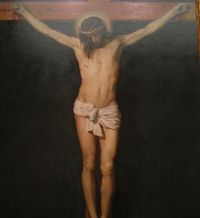
Crucifixion is an ancient method of execution, where the victim was tied or nailed to a large wooden cross and left to hang there until dead. It is mostly widely known as a not uncommon but extremely dishonorable as well as excruciating form of judicial execution in the Roman Empire, though similar methods were employed in other ancient cultures. Crucifixion has special significance in Christianity, which holds that Jesus was crucified but later resurrected. Because of this the Christian cross or crucifix has become a common symbol of Christianity.

Crucifixion was used by the Romans until about 313 AD, when Christianity became the dominant faith in Rome. However, it has been used in various places in modern times.

According to the Gospels, Joseph of Arimathea was the man who donated his own prepared tomb for the burial of Jesus after Jesus was crucified.


More...

Thursday, June 15, 2006

Joseph of Arimathea

Joseph of Arimathea, according to the Gospels, was the man who donated his own prepared tomb for the burial of Jesus after Jesus was crucified. A native of Arimathea, he was apparently a man of wealth, and a member of the Sanhedrin (which is the way bouleutes, literally "senator", is interpreted in Matthew 27:57 and Luke 23:50). Joseph was an "honourable counsellor, who waited (or "was searching" which is not the same thing) for the kingdom of God" (Mark, 15:43). As soon as he heard the news of Jesus' death, he "went in boldly" (literally "having summoned courage, he went") "unto Pilate, and craved the body of Jesus."

Pilate, who was reassured by a centurion that the death had really taken place, allowed Joseph's request. Joseph immediately purchased fine linen (Mark 15:46) and proceeded to Golgotha to take the body down from the cross. There, assisted by Nicodemus, he took the body and wrapped it in the fine linen, sprinkling it with the myrrh and aloes which Nicodemus had brought (John 19:39).

More...
 

Subscribe


LifeNews.com

Desiring God Blog

Youth for Christ International