Sunday, March 14, 2010

The Defeat of Satan

The deceiver was given an advantage when Jesus was led into the desert to be tempted. Jesus was by Himself, none to pray for Him or to give Him any advice during this difficult time of temptation.
  • 40 days.
  • No food.
Jesus knew His own strength, and could give Satan this advantage. We, on the other hand, dare not.

The Temptation of Jesus
1 Jesus, full of the Holy Spirit, returned from the Jordan and was led by the Spirit in the desert, 2 where for forty days he was tempted by the devil. He ate nothing during those days, and at the end of them he was hungry.

3 The devil said to him, "If you are the Son of God, tell this stone to become bread."

4 Jesus answered, "It is written: 'Man does not live on bread alone.'"

The devil led him up to a high place and showed him in an instant all the kingdoms of the world. 6 And he said to him, "I will give you all their authority and splendor, for it has been given to me, and I can give it to anyone I want to. 7 So if you worship me, it will all be yours."

8 Jesus answered, "It is written: 'Worship the Lord your God and serve him only.'"

9 The devil led him to Jerusalem and had him stand on the highest point of the temple. "If you are the Son of God," he said, "throw yourself down from here. 10 For it is written:

" 'He will command his angels concerning you to guard you carefully;

11 they will lift you up in their hands, so that you will not strike your foot against a stone.'"

12 Jesus answered, "It says: 'Do not put the Lord your God to the test.'"

13 When the devil had finished all this tempting, he left him until an opportune time. —Luke 4:1-13
Jesus was human, like us, depended upon the Father's Providence and promise. The Word of God is our sword, and faith in it, our shield. We must always know that God is faithful and, we can depend upon Him to keep His promises. He has many ways of providing for His children. Satan, on the other hand, tells nothing but lies and if given an inch he will take a mile. He will use any opportunity he has to trap, deceive, and insnare you to your destruction. We need to reject, without omission, any and all of Satan's deceptions, all opportunities offering sinful advancement or personal gain that are offered as a price for our very souls. Rather, we ought to seek all things in worship and service only of God.

More...

Saturday, March 13, 2010

Eternity

The word eternity often means existing for an infinite, i.e., limitless, amount of time, many have used it to refer to a timeless existence altogether "outside" of time. There are a number of arguments for eternity, by which proponents of the concept, principally Aristotle, purported to prove that matter, motion, and time must have existed eternally.

Eternity as a timeless existence
Saint Augustine of Hippo wrote that time exists only within the created universe (see creation), so that God exists outside of time; for God there is no past or future, but only an eternal present. One need not believe in God in order to hold this concept of eternity: for example, an atheist mathematician can maintain the philosophical tenet that numbers and the relationships among them exist outside of time, and so are in that sense eternal.

The biblical word eternal is used in place of the Hebrew word qedem קדם Strong's H6924 (east, antiquity, front, that which is before, aforetime), with an early reference in the biblical book of Job:

More...

Friday, March 12, 2010

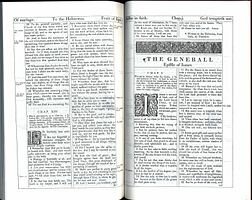
Epistle to the Hebrews

The Epistle to the Hebrews (abbr. Heb for citations) is a very consciously "literary" document in the New Testament. The purity of its Greek was noted by Clement of Alexandria, according to Eusebius of Caesarea (Historia Eccl., VI, xiv), and Origen asserted that every competent judge must recognize a great difference between this epistle and Paul's (Eusebius, VI, xxv).

The letter has carried its traditional title since Tertullian described it as Barnabae titulus ad Hebraeos in De Pudicitia chapter 20 ("Barnabas's Letter to the Hebrews").

More...

Thursday, March 11, 2010

The Four Loves

The Four Loves is a book by C. S. Lewis which explores the nature of love from a Christian perspective through thought-experiments and examples from literature. The content of the examination is prefaced by Lewis' admission that he initially mistook John the Apostle's words "God is Love" (1 John 4:7-9, 1 John 4:15-17) for a simple inroads to his topic. By distinguishing need-love (such as the love of a child for its mother) from gift-love (epitomized by God's love for humanity), Lewis happens upon the contemplative that the natures of even these basic categorizations of love are more complicated than they, at first, seem. As a result, he formulates the foundation of his topic ("the highest does not stand without the lowest") by exploring the nature of pleasure, and then divides love into four categories, based in part on the four Greek words for love: affection, friendship, eros, and charity. It must be noted, states Lewis, that just as Lucifer—a former archangel—perverted himself by pride and fell into depravity, so too can love— commonly held to be the arch-emotion—become corrupt by presuming itself to be what it is not ("love begins to be a demon the moment he begins to be a god").

As with other languages, it has been historically difficult to separate the meanings of these words for love. Nonetheless, the senses in which these words were generally used are given below.

More...

Wednesday, March 10, 2010

Gamaliel

Gamaliel the Elder (gəmā'lēəl), or Rabbi Gamaliel I, was a leading authority in the Sanhedrin in the mid first century. He was the grandson of the great Jewish teacher Hillel the Elder, and died twenty years before the destruction of the second temple in Jerusalem. He fathered a son, whom he called Simeon, after his father.

Gamaliel the Elder (gəmā'lēəl), or Rabbi Gamaliel I, was a leading authority in the Sanhedrin in the mid first century. He was the grandson of the great Jewish teacher Hillel the Elder, and died twenty years before the destruction of the second temple in Jerusalem. He fathered a son, whom he called Simeon, after his father's name, and a daughter, whose daughter (i.e., Gamaliel's granddaughter) married a priest named Simon ben Nathanael. The name Gamaliel is the Greek form of the Hebrew name meaning reward of God.

In the Christian tradition, Gamaliel is celebrated as a Pharisee doctor of Jewish Law, who was the teacher of Paul the Apostle; portrays Gamaliel as a man of great respect.

More...

Tuesday, March 09, 2010

Sharia

Sharia (Arabic: شريعة) is the body of Islamic religious law. The term means "way" or "path to the water source"; it is the legal framework within which the public and private aspects of life are regulated for those living in a legal system based on Islamic principles of jurisprudence and for Muslims living outside the domain. Sharia deals with many aspects of day-to-day life, including politics, economics, banking, business, contracts, family, sexuality, hygiene, and social issues — essentially, a way of life.

According to Religion News Blog published by Apologetics Index:
The Sharia (Islamic law) specifies the obligatory acts (fardh), the omission of which constitutes sin, and forbidden acts (haram), the practice of which constitutes sins. Everything else, not derived from these principles, are said to be permissable (mubah).

Throughout the world, Sharia has led — and still leads – to human rights violations — including cruel and unusual punishments (e.g. death penalty by stoning, hanging, or beheading. Amputations of hands and/or feet. Public executions, and etcetera).

Islamism is an ideology in Islam that wants to use the Sharia to its full extent, meaning that secular forms of governments and institutions are considered foreign to a true Muslim society.

By its very nature, Islam makes it extremely difficult for Muslims to integrate. Islam means submission, and the Quran makes it clear that Muslims expect non-Muslims to submit to Islam.

Therefore, Sharia has no place in a modern, free and civilized society.


More...

Monday, March 08, 2010

William Blake

William Blake (28 November 1757–12 August 1827) was an English poet, painter, and printmaker. Largely unrecognised during his lifetime, Blake is now considered a primary figure in the history of both the poetry and visual arts of the Romantic Age. His prophetic poetry has been said to form "what is in proportion to its merits the least read body of poetry in the English language". His visual artistry has led one British art journalist to proclaim him "far and away the greatest artist Britain has ever produced". Although he only once journeyed farther than a day's walk outside London during his lifetime, he produced a diverse and symbolically rich corpus, which embraced the imagination as "the body of God", or "Human existence itself".

Considered mad by contemporaries for his idiosyncratic views, Blake is held in high regard by later critics for his expressiveness and creativity, and for the philosophical and mystical undercurrents within his work. His paintings and poetry have been characterized as part of both the Romantic movement and "Pre-Romantic", for its large appearance in the 18th century. Reverent of the Bible but hostile to the Church of England, Blake was influenced by the ideals and ambitions of the French and American revolutions, as well as by such thinkers as Jakob Böhme and Emanuel Swedenborg.

Despite these known influences, the singularity of Blake's work makes him difficult to classify. The 19th century scholar William Rossetti characterised Blake as a "glorious luminary," and as "a man not forestalled by predecessors, nor to be classed with contemporaries, nor to be replaced by known or readily surmisable successors."

More...

Saturday, March 06, 2010

Hermit

A hermit (from the Greek ἔρημος ēremos, signifying "desert", "uninhabited", hence "desert-dweller"; adjective: "eremitic") is a person who lives to some greater or lesser degree in seclusion from society.

In Christianity, the term was originally applied to a Christian who lives the eremitic life out of a religious conviction, namely the Desert Theology of the Old Testament (i.e., the forty years wandering in the desert that was meant to bring about a change of heart).
In the Christian tradition the eremitic life is an early form of monastic living that preceded the monastic life in the cenobium. The Rule of St Benedict (ch. 1) lists hermits among four kinds of monks. In addition to hermits that are members of religious orders, modern Roman Catholic Church law (canon 603) recognizes also consecrated hermits under the direction of their diocesan bishop as members of the Consecrated Life.

Often, both in religious and secular literature, the term "hermit" is used loosely for anyone living a solitary life-style, including the misanthrope, and in religious contexts is sometimes assumed to be interchangeable with anchorite / anchoress (from the Greek ἀναχωρέω anachōreō, signifying "to withdraw", "to depart into the country outside the circumvallate city"), recluse and solitary. However, it is important to retain a clear distinction between the vocation of hermits and that of anchorites.

More...

Friday, March 05, 2010

For the Love of Money

Both the Hebrew bible (containing common portions of the Jewish and Christian canons) and Christian New Testament have a substantial amount to say about money and finances; evidence that these principles are something God considers important for us to be aware of.
10 For the love of money is a root of all kinds of evil. Some people, eager for money, have wandered from the faith and pierced themselves with many griefs... —1 Timothy 6:10 NIV

  • φιλαργυρία philargyria: for the love of money (avarice)
  • ῥίζα rhiza: is a root (that which like a root springs from a root, a sprout, shoot)
  • πᾶς pas: of all (each, every, any, all, the whole, everyone, all things, everything)
  • κακός kakos sorts of evil

  1. of a bad nature
    • not such as it ought to be
  2. of a mode of thinking, feeling, acting
    • base, wrong, wicked
  3. troublesome, injurious, pernicious, destructive, baneful


More...

Thursday, March 04, 2010

The Report to the Church

8And Jesus came and said to them, "All authority in heaven and on earth has been given to me. 19Go therefore and make disciples of all nations, baptizing them in the name of the Father and of the Son and of the Holy Spirit, 20teaching them to observe all that I have commanded you. And behold, I am with you always, to the end of the age."

Referring to the above verses of Matthew 28, the following narrative of the entire chapter provides the context with and to which it refers

The Report of the Church

16Now the eleven disciples went to Galilee, to the mountain to which Jesus had directed them.

This mountain is reminiscent of the other sites of revelation in the Gospel (Sermon on the Mount 5:1; The Transfiguration 17:1). All our primary corroboration indicates the Christian missionary momentum, suggesting that it arose from Jesus, as heterogeneous Gospel accounts affirm. Mary Magdalene offered a legitimate explanation (The Resurrection 28:1-10) and the guards one fabricated for money (11-15). The final paragraph commands that we, like Mary, must give an honest report and resist the temptation of money and safety that the guards fell prey to.

The story teaches us about belief and skepticism. Verse 9 suggests that those who clasped his feet and worshipped him recognize him for who he is--"God with them" (1:23; Isaiah 7:14). But others are skeptical (v. 17) or even too amazed to believe (as in Lk 24:40). As is true with Mark (Mk 16:8) that disciples often are foolishly unbelieving:
30If that is how God clothes the grass of the field, which is here today and tomorrow is thrown into the fire, will he not much more clothe you, O you of little faith? —Matt 6:30
even after Jesus is raised from the dead. Since even after the disciples have seen the resurrected Christ with their own eyes caused them to question what they had seen, surely we should not wait before we believe, since God provided ample evidence already.

More...

Wednesday, March 03, 2010

Cessationism

In Christian theology, cessationism is the view that the charismatic gifts of the Holy Spirit, such as tongues, prophecy and healing, ceased being practiced early on in Church history.

Cessationists usually believe the miraculous gifts were given only for the foundation of the Church, during the time between the coming of the Holy Spirit on Pentecost, c. AD 33 (see Acts 2) and the fulfillment of God's purposes in history, usually identified as either the completion of the last book of the New Testament or the death of the last Apostle. Its counterpart is continuationism.

Types of cessationist

Cessationists are divided into four main groups:
  1. Concentric Cessationists believe that the miraculous gifts have indeed ceased in the mainstream church and evangelized areas, but appear in unreached areas as an aid to spreading the Gospel (Martin Luther and John Calvin, though they were somewhat inconsistent in this position. Daniel B. Wallace is now the most prominent scholar to hold this view).
  2. Classical (or "Weak") cessationists assert that the miraculous gifts such as prophecy, healing and speaking in tongues ceased with the apostles and only served as launching pads for the spreading of the Gospel. However, these cessationists do believe that God still occasionally does miracle-like activities today, such as healings or divine guidance, so long as these "miracles" do not accredit new doctrine or add to the New Testament canon (Warfield, Gaffin). John MacArthur is perhaps the best-known classical cessationist.
  3. Full Cessationists argue that along with no miraculous gifts, there are also no miracles performed by God today. This argument, of course, turns on one's understanding of the term, "miracle."
  4. Consistent Cessationists believe that not only were the miraculous gifts only for the establishment of the first-century church, but the so-called five-fold ministry found in Eph. 4 was also a transitional institution (i.e., There are no more apostles, prophets, but also no more pastors, teachers, or evangelists).


More...

Tuesday, March 02, 2010

Socialism

Socialism refers to a broad set of economic theories of social organization advocating state or collective ownership and administration of the means of production and distribution of goods, and a society characterized by equal opportunities for all individuals with a fair or egalitarian method of compensation. Modern socialism originated in the late nineteenth-century working class political movement and the intellectual movement of that period which criticized the effects of industrialization and private ownership on society. Karl Marx posited that socialism would be achieved via class struggle and a proletarian revolution and would represent the transitional stage between capitalism and communism.

The first socialists predicted a world improved by harnessing technology and combining it with better social organization, and many modern socialists share this belief , although modern socialists have a bigger emphasis on egalitarianism whereas traditional socialists favored meritocracy. Socialists mainly share the belief that capitalism unfairly concentrates power and wealth among a small segment of society that controls capital, creates an unequal society and does not provide equal opportunities for everyone in society to attain such status. Therefore socialists advocate the creation of a society in which wealth and power are distributed more evenly based on the amount of work expended,although there is considerable disagreement among socialists over how, and to what extent this could be achieved.

More...

Monday, March 01, 2010

Ezekiel

The book of Ezekiel is a book of the Jewish Hebrew bible as well as the Christian Old Testament, attributed to the prophet Ezekiel (Hebrew: יחזקאל, Yehezkel).

Biography of Ezekiel

According to the Book of Ezekiel

The Book of Ezekiel gives little detail about Ezekiel's life. In it, he is mentioned only twice by name: 1:3 and 24:24. Ezekiel is a priest, the son of Buzi (my contempt), and his name means "God will strengthen". He was one of the Israelite exiles, who settled at a place called Tel-abib, on the banks of the Chebar, "in the land of the Chaldean dynasty." The place is thus not identical to the modern city Tel Aviv-Yafo, which is, however, named after it. He was probably carried away captive with Jehoiachin (2 Kings 24:14-16) about 597 BC.

More...

Saturday, February 27, 2010

Son of Man

In the bible, Jesus (Greek Iēsous) often refers to Himself as the Son of Man.
32And they were on the road, going up to Jerusalem, and Jesus was walking ahead of them. And they were amazed, and those who followed were afraid. And taking the twelve again, he began to tell them what was to happen to him,33saying, "See, we are going up to Jerusalem, and the Son of Man will be delivered over to the chief priests and the scribes, and they will condemn him to death and deliver him over to the Gentiles.34And they will mock him and spit on him, and flog him and kill him. And after three days he will rise." —Mark 10:32-34 ESV

Christian interpretation

The phrase son of man took on Messianic significance within the Christian movement primarily due to the Jewish eschatology during the time of its early conception. Originating in the book of Daniel (7:13), in a vision, one like a son of man is described coming upon the clouds of the sky to unite the world.

As a result, some Christians believe that in the body of the New Testament, son of man is used forty-three times as a distinctive title of Jesus within this Messianic context. Other Christians interpret it as Jesus showing humility, avoiding using titles like Messiah and Son of God. Still other Christians believe the title is meant to signify Jesus upholding his identification with his humanity and fellowship with mankind, perhaps also conveying the idea that Jesus is the man par excellence. In this last context it serves as putting humans and Jesus on the same level.

Jewish interpretation

As generally interpreted by Jews, denotes mankind generally, with special reference to their weakness and frailty (Job 25:6; Psalms 8:4; 144:3; 146:3; Isaiah 51:12, etc.).

It is a title frequently given to the prophet Ezekiel, probably to remind him of his human weakness.

Additionally, the Biblical book of Daniel mentions the prophet's vision of the coming of one 'like a son of man'; possibly implying that this is not actually a man but a divine figure.

When interpreting the Bible, one cannot exclusively rely on English translations. Son of man in Job 25 is ben adam (Hebrew: בן־אדם), and "son of man" in Psalms 144 is ben enosh (Hebrew: בן־אנוש). This phrase also appears in the non-canonical Book of Enoch.

More...

Friday, February 26, 2010

Sunni Muslims

Sunni Muslims are by far the largest denomination of Islam, the second largest being Shia Islam They are also referred to as Ahlus Sunnah wal-Jamaa'h (Arabic: أهل السنة والجماعة) (people of the example (of Muhammad) and the community) which implies that they are the majority, or Ahl ul-Sunna (Arabic: أهل السنة; "The people of the example (of Muhammad)") for short. The word Sunni comes from the word sunna (Arabic : سنة ), which means the words and actions or example of the Prophet of Islam, Muhammad. They represent the branch of Islam that accepted the caliphate of Abu Bakr due to him being chosen by majority, thus elections, or Shurah, on the caliphate being the first distinguishing factor in Sunni Islam. Most Sunni lawyers define themselves as those Muslims who are rooted in one of the four orthodox schools of Sunni law (Hanafi, Maliki, Shafii or Hanbali).

More...

Thursday, February 25, 2010

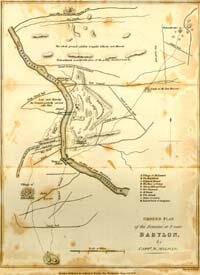
Babylon

Babylon (in Arabic: بابل; in Syriac: ܒܒܙܠ in Hebrew: בבל) is the Greek variant of Akkadian Babilu (bāb-ilû, meaning "Gateway of the god", translating Sumerian Kadingirra), an ancient city in Mesopotamia (modern Al Hillah, Iraq, see also: Iraq Maps), the ruins of which can be found in present-day Babil Province, about 50 miles (80 km) south of Baghdad. It was the "holy city" of Babylonia from around 2300 BC, and the seat of the Neo-Babylonian empire from 612 BC. In the Bible, the name appears as בבל (Babel - Genesis 10:10, 11:1, 11:9).

In the Old Testament, the name appears as בבל (Babel), interpreted by Genesis 11:9 to mean "confusion", its Etymology from the verb balal, "to confuse".

The Hanging Gardens of Babylon were one of the Seven Wonders of the Ancient World.

More...

Wednesday, February 24, 2010

Billy Graham

The Rev. Dr. William Franklin Graham, Jr. KBE (born November 7, 1918 in Charlotte, North Carolina), commonly known as "Billy Graham," is an American Christian evangelist. He has often advised U.S. presidents and continues to be listed as one of the "Ten Most Admired Men in the World" in Gallup Polls. He is of Scottish descent.

Raised as a Presbyterian, Billy Graham switched denominations to Southern Baptist in 1934 during a Christian revival meeting conducted by Mordecai Ham. Graham was ordained a Southern Baptist minister in 1939.

After graduating from Sharon High School in May 1936, Graham attended Bob Jones College (now Bob Jones University) but found it to be extremely fundamentalist and, considering this disobliging, he transferred to the Florida Bible Institute, now Trinity College of Florida, in 1937 and graduated from Wheaton College in 1943.

More...

Tuesday, February 23, 2010

Codex

A codex (Latin for block of wood, book; plural codices) is a book in the format used for modern books, with separate pages normally bound together and given a cover. It was a Roman invention that replaced the scroll, which was the first form of book in all Eurasian cultures.

Although technically any modern paperback is a codex, the term is only used for manuscript (hand-written) books, produced from Late Antiquity through the Middle Ages. The scholarly study of manuscripts from the point of view of the bookmaking craft is called codicology. The study of ancient documents in general is called paleography.

New World codices were written as late as the sixteenth century. Those written before the Spanish conquests seem all to have been single long sheets folded concertina-style, sometimes written on both sides of the local amatl paper. They are therefore strictly speaking not actually in codex format, although they more consistently have "Codex" in their usual names than other types of manuscript.

The codex was an improvement upon the scroll, which it gradually replaced, first in the West, and much later in Asia. The codex in turn became the printed book, for which the term is not used. In China, because books were already printed, but only on one side of the paper, there were intermediate stages, such as scrolls folded concertina-style and pasted together at the back.

More...

Monday, February 22, 2010

Wahhabism

Wahhabism (Arabic: Al-Wahhābīyya‎ الوهابية) or Wahabism is a conservative form of Sunni Islam attributed to Muhammad ibn Abd-al-Wahhab (1703–91), an 18th century scholar from what is today known as Saudi Arabia, who advocated a return to the practices of the first three generations of Islamic history.

Wahhabism is the dominant form of Islam in Saudi Arabia, and is also popular in Kuwait and the United Arab Emirates. It is often referred to as a "sect" or "branch" of Islam, though both its supporters and its opponents reject such designations. It has developed considerable influence in the Muslim world through the funding of mosques, schools and other means from Persian Gulf oil wealth.

The primary doctrine of Wahhabism is Tawhid, or the uniqueness and unity of Allah (the deity Muslims worship). Ibn Abdul Wahhab was influenced by the writings of Ibn Taymiyya and questioned medieval interpretations of Islam, claiming to rely on the Qur'an and the Hadith. He preached against a "perceived moral decline and political weakness" in the Arabian Peninsula and condemned idolatry, the popular cult of saints, and shrine and tomb visitation.

More...

Sunday, February 21, 2010

History of Protestantism

The History of Protestantism begins with the Reformation movement, which began as an attempt to reform the Catholic Church and led to the fracturing of Christendom. Many western Christians were troubled by what they saw as false doctrines and malpractices within the Church, particularly involving the teaching and sale of indulgences. Another major contention was the rampant Simony and the tremendous corruption found at the time within the Church's hierarchy. At the time, this systemic corruption often reached all the way up to the Bishop of Rome himself, the Pope.

On 31 October 1517, Martin Luther nailed his Ninety-Five Theses On the Power of Indulgences to the door of the Wittenberg Castle Church, which served as a pin board for university-related announcements. This document outlined Luther's criticisms of the Church and the Pope. The most controversial points centered on the practice of selling indulgences and the Church's policy on purgatory.

Among Luther's spiritual predecessors were men such as John Wycliffe and Jan Hus. Other reformers, such as Huldrych Zwingli and John Calvin, soon followed Luther's lead. Church beliefs and practices under attack by Protestant reformers included purgatory, particular judgment, devotion to Mary, the intercession of the saints, most of the sacraments, and the authority of the Pope.

More...


Subscribe


LifeNews.com

Desiring God Blog

Youth for Christ International