Showing posts with label philosophy. Show all posts

Tuesday, February 22, 2011

Deconstructionism

The term Deconstruction was coined by Jacques Derrida in the 1960s
Deconstruction is a term in contemporary philosophy, literary criticism, and the social sciences, denoting a process by which the texts and languages of Western philosophy (in particular) appear to shift and complicate in meaning when read in light of the assumptions and absences they reveal within themselves. Jacques Derrida coined the term in the 1960s, and proved more forthcoming with negative, rather than pined-for positive, analysis of the school.

Subjects relevant to deconstruction include the philosophy of meaning in Western thought, and the ways that meaning is constructed by Western writers, texts, and readers and understood by readers. Though Derrida himself denied deconstruction was a method or school of philosophy, or indeed anything outside of reading the text itself, the term has been used by others to describe Derrida's particular methods of textual criticism, which involved discovering, recognizing, and understanding the underlying – and unspoken and implicit—assumptions, ideas, and frameworks that form the basis for thought and belief, for example, in complicating the ordinary division made between nature and culture. Derrida's deconstruction was drawn mainly from the work of Martin Heidegger and his notion of Destruktion but also from Levinas and his ideas upon the Other.

More...

Tuesday, February 01, 2011

The Gospels

Books in the new testament referred to as the Gospels:

In Christianity, a gospel (from Old English, "good news") is generally one of four canonical books of the New Testament that describe the miraculous birth, life, ministry, crucifixion, and resurrection of Jesus. These books are the Gospels according to Matthew, Mark, Luke and John, written between 65 and 100 AD.

Many modern scholars argue that the sequence in which the Gospel accounts have traditionally been printed in the Bible is not the order of their composition, and that the first canonical gospel to have been written is Mark (c 65-70), which in turn was used as a source for the gospels of Matthew and Luke. Matthew and Luke may have also used the hypothetical Q Document. These first three gospels are called the synoptic gospels because they share a similar view. The last gospel, the gospel of John, presents a very different picture of Jesus and his ministry from the synoptics.

The vast majority of biblical scholars believe the canonical gospels were originally written in Greek, although some believe the gospel of Matthew was originally written in Aramaic or Hebrew and later translated to Greek. However, Eusebius wrote that Matthew composed the Gospel According to the Hebrews and his Church Catalog suggests that it was the only Jewish Gospel. Yet, some have accused Eusebius of falsification.

Originally, the "gospel" meant the proclamation of God's saving activity in Jesus of Nazareth, or the agape (love) message proclaimed by Jesus of Nazareth. This is the original New Testament usage (for example Mark 1:14-15 or 1 Corinthians 15:1-9; see also Strong's G2098). The word is still used in this sense. Ancient, non-canonical works that purport to quote Jesus (e.g., Gospel of Thomas) are also called gospels, and the term refers, in general, to works of a genre of Early Christian literature (cf. Peter Stuhlmacher, ed., Das Evangelium und die Evangelien, Tübingen 1983, also in English: The Gospel and the Gospels).

More

Friday, August 13, 2010

Dallas Willard

Dallas Willard
image ©dwillard.org
Dallas Willard (September 4, 1935 - ) is an American philosophy professor and author born in Buffalo, Missouri. His work in philosophy has been primarily in phenomenology, particularly the work of Edmund Husserl. His more popular work has been in the area of Christian spiritual formation, within the various expressions of historic Christian orthodoxy.

Education

Willard attended William Jewell College, and later graduated from Tennessee Temple College in 1956 with a B.A. in Psychology, and from Baylor University in 1956 with a B.A. in Philosophy and Religion. He went to graduate school at Baylor University and the University of Wisconsin-Madison, earning a Ph. D. in Philosophy with a minor in the History of Science in 1964.

In his book "The Divine Conspiracy: Rediscovering Our Hidden Life In God," Willard  writes:
"The most telling thing about the contemporary Christian is that he or she has no compelling sense that understanding of and conformity with the clear teachings of Christ is of any vital importance to [their] life, and certainly not that it is in any way essential..Such obedience is regarded as just out of the question or impossible."

Willard taught at the University of Wisconsin in Madison from 1960-1965. Since then he has taught at the University of Southern California in Los Angeles, where he served as Director of the School of Philosophy from 1982-1985. He has also held visiting appointments at UCLA (1969) and the University of Colorado (1984).

His publications in philosophy are concerned primarily with epistemology, the philosophy of mind and of logic, and with the philosophy of Edmund Husserl. He has translated many of Husserl's early writings from German into English.

More...

Tuesday, June 22, 2010

Reductionism

Reductionism in philosophy describes a number of related, contentious theories that hold, very roughly, that the nature of complex things can always be reduced to (explained by) simpler or more fundamental things. This is said of objects, phenomena, explanations, theories, and meanings.

Roughly, this means that chemistry is based on physics, biology is based on chemistry, psychology and sociology are based on biology. The first two of these reductions are commonly accepted but the last step is controversial and therefore the frontier of reductionism: evolutionary psychology and sociobiology versus those who claim that such special sciences are inherently irreducible. Reductionists believe that the behavioral sciences should become a "genuine" scientific discipline by being based exclusively on genetic biology.

In the painting (right) by the Spanish artist Pablo Picasso (1881-1973), titled "The Lovers," painted in 1923, we see that the two figures are rendered realistically and that they have the appearance of being a loving couple. But, the hands and the faces have been innately simplified and are presented as simple lines rather than circumspectly imitated models.

We still read them as hands and faces, but they have been simplified from the natural forms. This simplification of the image allows Picasso freedom with line and paint, rather than to be entirely involved in painting reality.

A very typical reductionistic book is The Selfish Gene by atheist and self-proclaimed secular humanist, sceptic, "scientific" rationalist, supporter of the Brights movement, and critic of creationism and intelligent design, Richard Dawkins. It argues that because genes are the fundamental elements of life, all life and all natural behavior can best be understood by studying genetic mechanisms. This way all life is best regarded as temporary accommodation and a reproduction device for the genes.

In his book The Blind Watchmaker, Dawkins introduced the term "hierarchic reductionism". This means that reductionism can only work when it is used one level at a time. For example: when you throw Stephen Jay Gould out of a window, his fall can be explained by classical mechanics. But you should not try to understand his work from such elementary principles.

More...

Sunday, April 25, 2010

Rationalism

Rationalism, also known as the rationalist movement, is a philosophical doctrine that asserts that the truth can best be discovered by reason and factual analysis, rather than faith, dogma or religious teaching. Rationalism has some similarities in ideology and intent to humanism, secular humanism, and atheism, in that it aims to provide a framework for social and philosophical discourse outside of religious or supernatural beliefs; however, rationalism differs from both of these, in that:

As its name suggests, humanism is centered on the dignity and worth of people. While rationalism is a key component of humanism, there is also a strong ethical component in humanism that rationalism does not require. As a result, being a rationalist does not necessarily mean being a humanist.

Atheism, a disbelief or lack of belief in God, can be on any basis, or none at all, so it doesn't require rationalism. Furthermore, rationalism does not, in itself, affirm or deny atheism, although it does reject any belief based on faith alone. Historically, many rationalists were not atheists. Presumably, people who are rationalists today generally do not believe that theism can be rationally justified, because modern-day rationalism is strongly correlated with atheism.

More...

Thursday, April 01, 2010

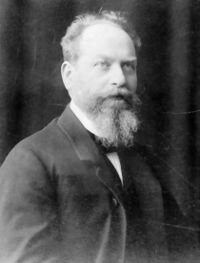
Edmund Husserl

Edmund Gustav Albrecht Husserl (April 8, 1859 – April 26, 1938) was a philosopher, known as the father of phenomenology. His work was a break with the purely positivist orientation and understanding of the science and philosophy of his day, giving weight to subjective experience as the source of all of our knowledge of objective phenomena.

Husserl was a pupil of Franz Brentano and Carl Stumpf; his philosophical work influenced, among others, Eugen Fink, Max Scheler, Martin Heidegger, Jean-Paul Sartre, Emmanuel Lévinas, Rudolf Carnap, Hermann Weyl, Maurice Merleau-Ponty, Pierre Bourdieu, Paul Ricœur, Jacques Derrida, Jan Patočka, Roman Ingarden, Edith Stein (St. Teresa Benedicta of the Cross), Karol Wojtyla and Dallas Willard. In 1887 Husserl converted to Christianity and joined the Lutheran Church. He taught philosophy at Halle as a tutor (Privatdozent) from 1887, then at Göttingen as professor from 1901, and at Freiburg im Breisgau from 1916 until he retired in 1928. After this, he continued his research and writing by using the library at Freiburg.

More...

Thursday, February 04, 2010

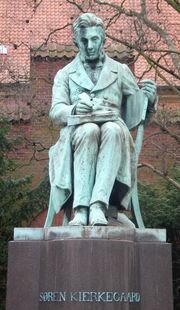
Søren Kierkegaard

Søren Aabye Kierkegaard (5 May 1813 – 11 November 1855) was a prolific 19th century Danish philosopher and theologian. Kierkegaard strongly criticized both the Hegelianism of his time, and what he saw as the empty formalities of the Danish church. Much of his work deals with religious problems such as the nature of faith, the institution of the Christian Church, Christian ethics and theology, and the emotions and feelings of individuals when faced with life choices. His early work was written under various pseudonyms who present their own distinctive viewpoints in a complex dialogue. Kierkegaard left the task of discovering the meaning of the works to the reader, because "the task must be made difficult, for only the difficult inspires the noble-hearted". Subsequently, many have interpreted Kierkegaard as an existentialist, neo-orthodoxist, postmodernist, humanist, individualist, etc. Crossing the boundaries of philosophy, theology, psychology, and literature, Kierkegaard came to be regarded as a highly significant and influential figure in contemporary thought.

Søren Kierkegaard was born to an affluent family in Copenhagen, the capital of Denmark. His mother, Ane Sørensdatter Lund Kierkegaard, had served as a maid in the household before marrying Søren's father. She was an unassuming figure: quiet, plain, and not formally educated. She is not directly referred to in Kierkegaard's books, although she too affected his later writings. His mother died on July 31, 1834, age 66.

His father, Michael Pedersen Kierkegaard, was a melancholic, anxious, deeply pious, and fiercely intelligent man. Convinced that he had earned God's wrath, he believed that none of his children would live past the age attained by Jesus Christ, that of 33. He believed his personal sins, such as cursing the name of God in his youth and possibly impregnating Ane out of wedlock, necessitated this punishment. Though many of his seven children died young, his prediction was disproved when two of them surpassed this age: Søren and Peter Christian Kierkegaard, a Lutheran bishop several years Søren's senior. This early introduction to the notion of sin and its connection from father and son laid the foundation for much of Kierkegaard's work (particularly Fear and Trembling). Despite his father's occasional religious melancholy, Kierkegaard and his father shared a close bond. Kierkegaard learned to explore the realm of his imagination through a series of exercises and games they played together.

Kierkegaard's father died on August 9, 1838 at the age of 82. Before his death, he asked Søren to become a pastor. Søren was deeply influenced by his father's religious experience and life and felt obligated to fulfill his wish. Two days later, on August 11, Kierkegaard wrote:
"My father died on Wednesday. I had so very much wished that he might live a few years longer, and I look upon his death as the last sacrifice which he made to his love for me; .. he died for me in order that, if possible, I might still turn into something. Of all that I have inherited from him, the recollection of him, his transfigured portrait .. is dearest to me, and I will be careful to preserve [his memory] safely hidden from the world."


More...

Sunday, January 31, 2010

Friedrich Wilhelm Joseph Schelling


Friedrich Wilhelm Joseph Schelling (January 27, 1775 – August 20, 1854), later von Schelling, was a German philosopher. Standard histories of philosophy make him
the midpoint in the development of German Idealism, situating him between Fichte, his mentor prior to 1800, and Hegel, his former university roommate and erstwhile friend. Interpreting Schelling's philosophy is often difficult because of its ever-changing nature.

Some scholars characterize him as a protean thinker who, although brilliant, jumped from one subject to another and lacked the synthesizing power needed to arrive at a complete philosophical system. Others challenge the notion that Schelling's thought is marked by profound breaks, instead arguing that his philosophy always focused on a few common themes, especially human freedom, the absolute, and the relationship between spirit and nature. Schelling's thought has often been neglected, especially in the English- speaking world. This stems not only from the ascendancy of Hegel, whose mature works portray Schelling as a mere footnote in the development of Idealism, but also from his Naturphilosophie, which positivist scientists have often ridiculed for its "silly"
analogizing and lack of empirical orientation. In recent years, Schelling scholars have forcefully attacked both of these sources of neglect.

More...

Friday, November 20, 2009

Friedrich Wilhelm Nietzsche

Photo by Hans Olde from the photographic series, The Ill Nietzsche, summer 1899Friedrich Wilhelm Nietzsche (October 15, 1844 – August 25, 1900) was a nineteenth-century German philosopher and philologist. He wrote critical texts on religion, morality, contemporary culture, philosophy, and science, using a distinctive German language style and displaying a fondness for aphorism. Nietzsche's influence remains substantial within and beyond philosophy, notably in existentialism and postmodernism. His style and radical questioning of the value and objectivity of truth raise considerable problems of interpretation, generating an extensive secondary literature in both continental and analytic philosophy. Nonetheless, his key ideas include interpreting tragedy as an affirmation of life, an eternal recurrence (which numerous commentators have re-interpreted), a rejection of Platonism, and a repudiation of (especially 19th-century) Christianity.

Nietzsche began his career as a classical philologist before turning to philosophy. At the age of 24 he became the Chair of Classical Philology at the University of Basel (the youngest-ever holder of this position), but resigned in 1879 due to health problems, which would plague him for most of his life. In 1889 he exhibited symptoms of serious mental illness, living out his remaining years in the care of his mother and sister until his death in 1900.

More...

Thursday, August 13, 2009

Dallas Willard

Dallas Willard, Seminar in Portland, Oregon, 2008Dallas Willard (September 4, 1935 - ) is an American philosophy professor and author born in Buffalo, Missouri. His work in philosophy has been primarily in phenomenology, particularly the work of Edmund Husserl. His more popular work has been in the area of Christian spiritual formation, within the various expressions of historic Christian orthodoxy.

Willard attended William Jewell College, and later graduated from Tennessee Temple College in 1956 with a B.A. in Psychology, and from Baylor University in 1956 with a B.A. in Philosophy and Religion. He went to graduate school at Baylor University and the University of Wisconsin-Madison, earning a Ph. D. in Philosophy with a minor in the History of Science in 1964.

More...

Wednesday, April 01, 2009

Edmund Husserl

Edmund HusserlEdmund Gustav Albrecht Husserl (April 8, 1859 – April 26, 1938) was a philosopher, known as the father of phenomenology. His work was a break with the purely positivist orientation and understanding of the science and philosophy of his day, giving weight to subjective experience as the source of all of our knowledge of objective phenomena.

Husserl was a pupil of Franz Brentano and Carl Stumpf; his philosophical work influenced, among others, Eugen Fink, Max Scheler, Martin Heidegger, Jean-Paul Sartre, Emmanuel Lévinas, Rudolf Carnap, Hermann Weyl, Maurice Merleau-Ponty, Pierre Bourdieu, Paul Ricœur, Jacques Derrida, Jan Patočka, Roman Ingarden, Edith Stein (St. Teresa Benedicta of the Cross), Karol Wojtyla and Dallas Willard. In 1887 Husserl converted to Christianity and joined the Lutheran Church. He taught philosophy at Halle as a tutor (Privatdozent) from 1887, then at Göttingen as professor from 1901, and at Freiburg im Breisgau from 1916 until he retired in 1928. After this, he continued his research and writing by using the library at Freiburg.

Husserl was born into a Jewish family in Prossnitz, Moravia, then part of the Austrian Empire, after 1918 a part of Czechoslovakia (since 1993, the Czech Republic).

Wednesday, March 04, 2009

Philosophy

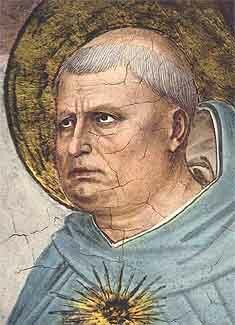
Thomas AquinasPhilosophy is the study of general problems concerning matters such as existence, knowledge, truth, beauty, justice, validity, mind, and language. Philosophy is distinguished from other ways of addressing these questions (such as Christian mysticism or mythology) by its critical, generally systematic approach and its reliance on reasoned argument. The word philosophy is of Ancient Greek origin: φιλοσοφία (philosophía), meaning "love of wisdom."

To give an exhaustive list of the main branches of philosophy is difficult, because there have been different, equally acceptable divisions at different times, and the divisions are often relative to the concerns of a particular period. However, the following branches are usually accepted as the main areas of study.

  • Metaphysics investigates the nature of being and the world. Traditional branches are cosmology and Ontology.

  • Epistemology is concerned with the nature and scope of knowledge, and whether knowledge is possible. Among its central concerns has been the challenge posed by skepticism and the relationships between truth, belief, and justification.

  • Ethics, or 'moral philosophy', is concerned with questions of how persons ought to act or if such questions are answerable. The main branches of ethics are meta-ethics, normative ethics, and applied ethics. meta-ethics concerns the nature of ethical thought, comparison of various ethical systems, whether there are absolute ethical truths, and how such truths could be known. Ethics is also associated with the idea of morality. Plato's early dialogues include a search for definitions of virtue.

  • Political philosophy is the study of government and the relationship of individuals and communities to the state. It includes questions about justice, the good, law, property, and the rights and obligations of the citizen.

  • Aesthetics deals with beauty, art, enjoyment, sensory-emotional values, perception, and matters of taste and sentiment.

  • Logic deals with patterns of thinking that lead from true premises to true conclusions, originally developed in Ancient Greece. Beginning in the late 19th century, mathematicians such as Frege focused on a mathematical treatment of logic, and today the subject of logic has two broad divisions: mathematical logic (formal symbolic logic) and what is now called philosophical logic.

  • Philosophy of mind deals with the nature of the mind and its relationship to the body, and is typified by disputes between dualism and materialism. In recent years there has been increasing similarity between this branch of philosophy and cognitive science.

  • Philosophy of language is the reasoned inquiry into the nature, origins, and usage of language.


More...

Saturday, February 07, 2009

Atlas Shrugged

Atlas Shrugged is a novel by Ayn Rand, first published in 1957 in the United States. It was Rand's fourth, longest, and last novel. Afterward, she completed only non-fiction works, concentrating on philosophy, politics, and cultural criticism.

At over one thousand pages in length, she considered Atlas Shrugged to be her magnum opus. The book explores a number of philosophical themes that Rand would subsequently develop into the philosophy of Objectivism. It centers on the decline of Western civilization, and Rand described it as demonstrating the theme of "the role of man's mind in existence." In doing so it expresses many facets of Rand's philosophy, such as the advocacy of reason, individualism, and the market economy.

Atlas Shrugged, the three sections of the book:  Part 1 - Non-Contradiction;  Part 2 - Either-Or;  Part 3 - A Is A

The theme of Atlas Shrugged is the role of the mind in man's life and, consequently, presentation of a new morality: the morality of rational self-interest.

The main crux of the book surrounds the decision of the "men of the mind" to go on strike, refusing to contribute their inventions, art, business leadership, scientific research, or new ideas of any kind to the rest of the world. Each man of ability eventually reasons (or is convinced) that society hampers him with unnecessary, burdensome regulations and undervalues his contributions to the world, confiscating the profits and sullying the reputations he has rightfully earned. The peaceful cohesiveness of the world begins to disintegrate as each of these men of ability slowly disappears and society loses those individuals whose mental effort allows it to continue functioning. The strikers believe that they are crucial to a society that exploits them, denying them freedom or failing to acknowledge their right to self-interest, and the gradual collapse of civilization is triggered by their strike. This is not to say that they believed that giving the creators their due would cost civilization. Rather, the strikers believe that the current irrational altruist/collectivist culture impeded them and therefore the rest of society as well. As such it would serve no one's interest to continue to allow himself to be exploited, although the strike is not primarily motivated by the harm the current state of society does to others as well.

More...

Saturday, June 07, 2008

rationalism

Statue of philosopher Immanuel Kant after Friedrich Hagemann (1773-1806), Berlin, Museum Friedrichswerdersche KircheRationalism, also known as the rationalist movement, is a philosophical doctrine that asserts that the truth can best be discovered by reason and factual analysis, rather than faith, dogma or religious teaching. Rationalism has some similarities in ideology and intent to humanism, secular humanism, and atheism, in that it aims to provide a framework for social and philosophical discourse outside of religious or supernatural beliefs; however, rationalism differs from both of these, in that:


  • As its name suggests, humanism is centered on the dignity and worth of people. While rationalism is a key component of humanism, there is also a strong ethical component in humanism that rationalism does not require. As a result, being a rationalist does not necessarily mean being a humanist.

  • Atheism, a disbelief or lack of belief in God, can be on any basis, or none at all, so it doesn't require rationalism. Furthermore, rationalism does not, in itself, affirm or deny atheism, although it does reject any belief based on faith alone. Historically, many rationalists were not atheists. Presumably, people who are rationalists today generally do not believe that theism can be rationally justified, because modern-day rationalism is strongly correlated with atheism. As a result, most—if not all—prominent rationalists today, including scientists such as Richard Dawkins and activists such as Sanal Edamaruku are atheists.
Outside of religious discussion, the discipline of rationalism may be applied more generally, for example to political or social issues. In these cases it is the rejection of emotion, tradition or fashionable belief which is the defining feature of the rationalist perspective.

During the middle of the twentieth century there was a strong tradition of organized rationalism, which was particularly influenced by free thinkers and intellectuals. In the United Kingdom, rationalism is represented by the Rationalist Press Association, founded in 1899.

More...
 

Subscribe


LifeNews.com

Desiring God Blog

Youth for Christ International