Showing posts with label Phenomenology. Show all posts

Friday, August 13, 2010

Dallas Willard

Dallas Willard
image ©dwillard.org
Dallas Willard (September 4, 1935 - ) is an American philosophy professor and author born in Buffalo, Missouri. His work in philosophy has been primarily in phenomenology, particularly the work of Edmund Husserl. His more popular work has been in the area of Christian spiritual formation, within the various expressions of historic Christian orthodoxy.

Education

Willard attended William Jewell College, and later graduated from Tennessee Temple College in 1956 with a B.A. in Psychology, and from Baylor University in 1956 with a B.A. in Philosophy and Religion. He went to graduate school at Baylor University and the University of Wisconsin-Madison, earning a Ph. D. in Philosophy with a minor in the History of Science in 1964.

In his book "The Divine Conspiracy: Rediscovering Our Hidden Life In God," Willard  writes:
"The most telling thing about the contemporary Christian is that he or she has no compelling sense that understanding of and conformity with the clear teachings of Christ is of any vital importance to [their] life, and certainly not that it is in any way essential..Such obedience is regarded as just out of the question or impossible."

Willard taught at the University of Wisconsin in Madison from 1960-1965. Since then he has taught at the University of Southern California in Los Angeles, where he served as Director of the School of Philosophy from 1982-1985. He has also held visiting appointments at UCLA (1969) and the University of Colorado (1984).

His publications in philosophy are concerned primarily with epistemology, the philosophy of mind and of logic, and with the philosophy of Edmund Husserl. He has translated many of Husserl's early writings from German into English.

More...

Tuesday, April 13, 2010

Fine-tuned Universe

The term fine-tuned universe refers to the idea that conditions that allow life in the universe can only occur with the tightly restricted values of the universal physical constants, and that small changes in these constants would correspond to a very different universe, not likely conducive to the establishment and development of matter, astronomical structures, or life as it is presently known.

The arguments relating to the fine-tuned universe concept are related to the anthropic principle, which states that any valid theory of the universe must be consistent with our existence as human beings at this particular time and place in the universe. In other words even though the actual probability of a universe to be one which supports intelligent life is very low, the conditional probability given our existence in it is 1 — and even if there are other universes devoid of life, there will be no one to observe them.

More...

Wednesday, April 07, 2010

Supernatural

The supernatural (Latin: super- "exceeding" + nature) refers to forces and phenomena which are are not observed in nature, and therefore beyond verifiable measurement. If a phenomenon can be demonstrated, it can no longer be considered supernatural. Because phenomena must be subjected to verifiable measurement and peer review to be considered as a scientific theory, science cannot approach the supernatural.
"Measure what is measurable, and make measurable what is not so." —Galileo Galilei
Concepts in the supernatural domain are closely related to concepts in religious spirituality and metaphysics. The term "supernatural" is often used interchangeably with paranormal or preternatural — the latter typically limited to an adjective for describing abilities which appear to exceed possible bounds.

Characteristic for phenomena claimed as supernatural are anomaly, uniqueness and uncontrollability, thus lacking reproducibility required for scientific examination. Supernatural themes are often associated with paranormal and occult ideas, suggesting for possibility of interaction with the supernatural by means of summoning or trance for instance

More...

Thursday, April 01, 2010

Edmund Husserl

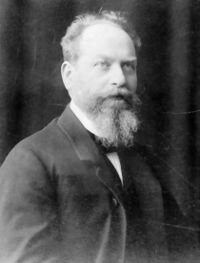
Edmund Gustav Albrecht Husserl (April 8, 1859 – April 26, 1938) was a philosopher, known as the father of phenomenology. His work was a break with the purely positivist orientation and understanding of the science and philosophy of his day, giving weight to subjective experience as the source of all of our knowledge of objective phenomena.

Husserl was a pupil of Franz Brentano and Carl Stumpf; his philosophical work influenced, among others, Eugen Fink, Max Scheler, Martin Heidegger, Jean-Paul Sartre, Emmanuel Lévinas, Rudolf Carnap, Hermann Weyl, Maurice Merleau-Ponty, Pierre Bourdieu, Paul Ricœur, Jacques Derrida, Jan Patočka, Roman Ingarden, Edith Stein (St. Teresa Benedicta of the Cross), Karol Wojtyla and Dallas Willard. In 1887 Husserl converted to Christianity and joined the Lutheran Church. He taught philosophy at Halle as a tutor (Privatdozent) from 1887, then at Göttingen as professor from 1901, and at Freiburg im Breisgau from 1916 until he retired in 1928. After this, he continued his research and writing by using the library at Freiburg.

More...

Friday, March 19, 2010

Phenomenology

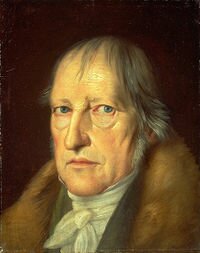
Phenomenology has at least three main meanings in philosophical history: one in the writings of Georg Wilhelm Friedrich Hegel, another in the writings of Edmund Husserl in 1920, and a third, deriving from Husserl's work, in the writings of his former research assistant Martin Heidegger in 1927.

For G.W.F. Hegel, phenomenology is an approach to philosophy that begins with an exploration of phenomena (what presents itself to us in conscious experience) as a means to finally grasp the absolute, logical, ontological and metaphysical Spirit that is behind phenomena. This has been called a "dialectical phenomenology."

For Edmund Husserl, phenomenology is "the reflective study of the essence of consciousness as experienced from the first-person point of view."

More...

Thursday, August 13, 2009

Dallas Willard

Dallas Willard, Seminar in Portland, Oregon, 2008Dallas Willard (September 4, 1935 - ) is an American philosophy professor and author born in Buffalo, Missouri. His work in philosophy has been primarily in phenomenology, particularly the work of Edmund Husserl. His more popular work has been in the area of Christian spiritual formation, within the various expressions of historic Christian orthodoxy.

Willard attended William Jewell College, and later graduated from Tennessee Temple College in 1956 with a B.A. in Psychology, and from Baylor University in 1956 with a B.A. in Philosophy and Religion. He went to graduate school at Baylor University and the University of Wisconsin-Madison, earning a Ph. D. in Philosophy with a minor in the History of Science in 1964.

More...

Wednesday, April 01, 2009

Edmund Husserl

Edmund HusserlEdmund Gustav Albrecht Husserl (April 8, 1859 – April 26, 1938) was a philosopher, known as the father of phenomenology. His work was a break with the purely positivist orientation and understanding of the science and philosophy of his day, giving weight to subjective experience as the source of all of our knowledge of objective phenomena.

Husserl was a pupil of Franz Brentano and Carl Stumpf; his philosophical work influenced, among others, Eugen Fink, Max Scheler, Martin Heidegger, Jean-Paul Sartre, Emmanuel Lévinas, Rudolf Carnap, Hermann Weyl, Maurice Merleau-Ponty, Pierre Bourdieu, Paul Ricœur, Jacques Derrida, Jan Patočka, Roman Ingarden, Edith Stein (St. Teresa Benedicta of the Cross), Karol Wojtyla and Dallas Willard. In 1887 Husserl converted to Christianity and joined the Lutheran Church. He taught philosophy at Halle as a tutor (Privatdozent) from 1887, then at Göttingen as professor from 1901, and at Freiburg im Breisgau from 1916 until he retired in 1928. After this, he continued his research and writing by using the library at Freiburg.

Husserl was born into a Jewish family in Prossnitz, Moravia, then part of the Austrian Empire, after 1918 a part of Czechoslovakia (since 1993, the Czech Republic).

Thursday, April 17, 2008

Edmund Husserl

Edmund HusserlEdmund Gustav Albrecht Husserl (April 8, 1859 – April 26, 1938) was a philosopher, known as the father of phenomenology. His work was a break with the purely positivist orientation and understanding of the science and philosophy of his day, giving weight to subjective experience as the source of all of our knowledge of objective phenomena.

Husserl was a pupil of Franz Brentano and Carl Stumpf; his philosophical work influenced, among others, Eugen Fink, Max Scheler, Martin Heidegger, Jean-Paul Sartre, Emmanuel Lévinas, Rudolf Carnap, Hermann Weyl, Maurice Merleau-Ponty, Pierre Bourdieu, Paul Ricœur, Jacques Derrida, Jan Patočka, Roman Ingarden, Edith Stein (St. Teresa Benedicta of the Cross), Karol Wojtyla and Dallas Willard. In 1887 Husserl converted to Christianity and joined the Lutheran Church. He taught philosophy at Halle as a tutor (Privatdozent) from 1887, then at Göttingen as professor from 1901, and at Freiburg im Breisgau from 1916 until he retired in 1928. After this, he continued his research and writing by using the library at Freiburg.

Education and early works

Husserl was born into a Jewish family in Prossnitz, Moravia, then part of the Austrian Empire, after 1918 a part of Czechoslovakia (since 1993, the Czech Republic).

More...

Wednesday, April 16, 2008

Dallas Willard

Dallas Willard image ©dwillard.orgDallas Willard (September 4, 1935 - ) is an American philosophy professor and author born in Buffalo, Missouri. His work in philosophy has been primarily in phenomenology, particularly the work of Edmund Husserl. His more popular work has been in the area of Christian spiritual formation, within the various expressions of historic Christian orthodoxy.

Education

Willard attended William Jewell College, and later graduated from Tennessee Temple College in 1956 with a B.A. in Psychology, and from Baylor University in 1956 with a B.A. in Philosophy and Religion. He went to graduate school at Baylor University and the University of Wisconsin-Madison, earning a Ph. D. in Philosophy with a minor in the History of Science in 1964.

Academic career

Willard taught at the University of Wisconsin in Madison from 1960-1965. Since then he has taught at the University of Southern California in Los Angeles, where he served as Director of the School of Philosophy from 1982-1985. He has also held visiting appointments at UCLA (1969) and the University of Colorado (1984).

His publications in philosophy are concerned primarily with epistemology, the philosophy of mind and of logic, and with the philosophy of Edmund Husserl. He has translated many of Husserl's early writings from German into English.

More...


Subscribe


LifeNews.com

Desiring God Blog

Youth for Christ International