Showing posts with label Carthage. Show all posts

Thursday, June 16, 2011

Augustine of Hippo

Aurelius Augustinus, Augustine of Hippo ("The knowledgeable one") (November 13, 354–August 28, 430) was one of the most important figures in the development of Western Christianity. In Roman Catholicism, he is a saint and pre-eminent Doctor of the Church. Many Protestants, especially Calvinists, consider him to be one of the theological fountainheads of Reformation teaching on salvation and grace. Born in Africa as the eldest son of Saint Monica, he was educated and baptised in Italy. His works—including The Confessions, which is often called the first Western autobiography—are still read by Christians around the world.

Saint Augustine was born in 354 in Tagaste, a provincial Roman city in North Africa. He was raised and educated in Carthage. His mother Monica was a devout Catholic and his father Patricius a pagan, but Augustine followed the controversial Manichaean religion, much to the horror of his mother.

Now we come to the man who is more than anyone else the representative of the West; he is the foundation of everything the West had to say. Augustine lived from A.D. 354 to 430. His influence overshadows not only the next thousand years but all periods ever since. In the Middle Ages his influence was such that even those who struggled against him in theological terminology and method—the Dominicans, with the help of Aristotle—quoted him often. Thomas Aquinas, who was the great opponent of Augustinianism in the Middle Ages, quoted him affirmatively most frequently [1]

As a youth Augustine lived a hedonistic lifestyle for a time, and in Carthage, he developed a relationship with a young woman who would be his concubine for over a decade, with whom he had a son.

More...
Thursday, March 26, 2009

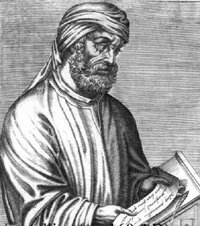
Tertullian

Quintus Septimius Florens Tertullianus, anglicized as Tertullian, (ca. 155–230) was a church leader and prolific author during the early years of Christianity. He was born, lived, and died in Carthage [vmap of Carthage] in what is today Tunisia.

Tertullian denounced Christian doctrines he considered heretical, but later in life adopted views that came to be regarded as heretical themselves. He was the first great writer of Latin Christianity, thus sometimes known as the "father of the Latin Church".

He introduced the term Trinity, as the Latin trinitas, to the Christian vocabulary and also probably of the formula "three Persons, one Substance" as the Latin "tres Personae, una Substantia" (itself from the Koine Greek "treis Hypostases, Homoousios") and also the terms vetus testamentum ("old testament") and novum testamentum ("new testament").

More...

Tuesday, December 11, 2007

Carthage

Ruins of Roman-era CarthageThe term Carthage (Greek: Καρχηδών, Arabic: قرطاج also قرطاجة, Latin: Carthago) refers both to an ancient city in North Africa located in modern day Tunis and to the civilization that developed within the city's sphere of influence. The city of Carthage was located on the eastern side of Lake Tunis across from the center of modern Tunis in Tunisia.

Settlement

Originally a settlement of Phoenician colonists, Carthage grew into a vast economic and political power throughout the Mediterranean Sea, accumulating wealth and influence through its economic (trading) prowess. Carthage was a superpower, contemporaneously with the Roman Republic of the 2nd and 3rd Century BC, and was its rival for dominance of the western Mediterranean. Eventually this rivalry led to a series of three wars known as the Punic Wars, each of which Carthage lost. These losses led to a decline in Carthage's political and economic strength, mostly due to the harsh penalties imposed on Carthage by Rome as conditions of the cessation of hostilities.

The Third Punic War ended with the complete destruction of the city of Carthage and the annexation of the last remnants of Carthaginian territory by Rome. Although a distinct Carthaginian civilization ceased to exist, remnants of it contributed to later Mediterranean cultures. The name Carthage is derived by way of Greek and Latin dialects from the Phoenician (QRT HDST) meaning "new city." More than one Phoenician settlement originally bore this name, although only one city has the distinction of being the Carthage of the ancient world.


More...

Monday, February 12, 2007

Carthage

Ruins of Roman-era CarthageThe term Carthage (Greek: Καρχηδών, Arabic: قرطاج also قرطاجة, Latin: Carthago) refers both to an ancient city in North Africa located in modern day Tunis and to the civilization that developed within the city's sphere of influence. The city of Carthage was located on the eastern side of Lake Tunis across from the center of modern Tunis in Tunisia.

Settlement
Originally a settlement of Phoenician colonists, Carthage grew into a vast economic and political power throughout the Mediterranean Sea, accumulating wealth and influence through its economic (trading) prowess. Carthage was a superpower, contemporaneously with the Roman Republic of the 2nd and 3rd Century BC, and was its rival for dominance of the western Mediterranean. Eventually this rivalry led to a series of three wars known as the Punic Wars, each of which Carthage lost. These losses led to a decline in Carthage's political and economic strength, mostly due to the harsh penalties imposed on Carthage by Rome as conditions of the cessation of hostilities.


More...


Subscribe


LifeNews.com

Desiring God Blog

Youth for Christ International