Showing posts with label Alexandria. Show all posts

Tuesday, December 20, 2011

Alexandria

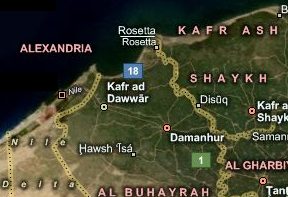
click image for full map
With a population of 3.5 to 5 million), Alexandria (Greek: Αλεξάνδρεια), is the second-largest city in Egypt, and its largest seaport. Alexandria extends about 20 miles (32 km) along the coast of the Mediterranean sea in the northwest of Egypt. It is home to the Bibliotheca Alexandrina, the New Library of Alexandria, and is an important industrial centre because of its natural gas and oil pipelines from Suez.

In ancient times, the city was known for the Lighthouse of Alexandria (one of the Seven Wonders of the Ancient World) and the Library of Alexandria (the largest library in the ancient world). Ongoing maritime archaeology in the harbour of Alexandria (which began in 1994) is revealing details of Alexandria both before the arrival of Alexander, when a city named Rhacotis existed there, and during the Ptolemaic dynasty.

The city of Alexandria was named after its founder, Alexander the Great and as the seat of the Ptolemaic rulers of Egypt, quickly became one of the greatest cities of the Hellenistic civilization — second only to Rome in size and wealth.

However, upon the founding of Cairo by Egypt's mediæval Islamic rulers, its status as the country's capital ended, and fell into a long decline, which by the late Ottoman period, had seen it reduced to little more than a small fishing village. The current city is Egypt's leading port, a commercial and transportation center, and the heart of a major industrial area where refined petroleum, asphalt, cotton textiles, processed food, paper, and plastics are produced.

It was the residence of the kings of Egypt for 200 years. It is not mentioned in the Old Testament, and only incidentally in the New Testament (Acts 18:24; 27:6; 28:11). It was for a long period the greatest of existing cities, for both Nineveh and Babylon had been destroyed, and Rome had not yet risen to greatness.

More...

Friday, July 09, 2010

Alexandria

Alexandria (Greek: Αλεξάνδρεια), (population of 3.5 to 5 million), is the second-largest city in Egypt, and its largest seaport. Alexandria extends about 20 miles (32 km) along the coast of the Mediterranean sea in the northwest of Egypt. It is home to the Bibliotheca Alexandrina, the New Library of Alexandria, and is an important industrial centre because of its natural gas and oil pipelines from Suez.

In ancient times, the city was known for the Lighthouse of Alexandria (one of the Seven Wonders of the Ancient World) and the Library of Alexandria (the largest library in the ancient world). Ongoing maritime archaeology in the harbour of Alexandria (which began in 1994) is revealing details of Alexandria both before the arrival of Alexander, when a city named Rhakotis existed there, and during the Ptolemaic dynasty.

The city of Alexandria was named after its founder, Alexander the Great and as the seat of the Ptolemaic rulers of Egypt, quickly became one of the greatest cities of the Hellenistic civilization — second only to Rome in size and wealth.

However, upon the founding of Cairo by Egypt's mediæval Islamic rulers, its status as the country's capital ended, and fell into a long decline, which by the late Ottoman period, had seen it reduced to little more than a small fishing village. The current city is Egypt's leading port, a commercial and transportation center, and the heart of a major industrial area where refined petroleum, asphalt, cotton textiles, processed food, paper, and plastics are produced.

More...

Thursday, February 12, 2009

Alexandria

virtual map of Alexandria.Alexandria (Greek: Αλεξάνδρεια), (population of 3.5 to 5 million), is the second-largest city in Egypt (see ancient Egypt), and its largest seaport. Alexandria extends about 20 miles (32 km) along the coast of the Mediterranean sea in the northwest of Egypt. It is home to the Bibliotheca Alexandrina, the New Library of Alexandria, and is an important industrial centre because of its natural gas and oil pipelines from Suez.

In ancient times, the city was known for the Lighthouse of Alexandria (one of the Seven Wonders of the Ancient World) and the Library of Alexandria (the largest library in the ancient world). Ongoing maritime archaeology in the harbour of Alexandria (which began in 1994) is revealing details of Alexandria both before the arrival of Alexander, when a city named Rhakotis existed there, and during the Ptolemaic dynasty.

The city of Alexandria was named after its founder, Alexander the Great and as the seat of the Ptolemaic rulers of Egypt, quickly became one of the greatest cities of the Hellenistic civilization — second only to Rome in size and wealth.

More...

Tuesday, April 08, 2008

Clement of Alexandria

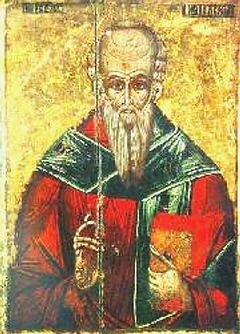
Clement of Alexandria (Titus Flavius Clemens)Clement of Alexandria (Titus Flavius Clemens), was the first member of the Church of Alexandria to be more than a name, and one of its most distinguished teachers. He was born about the middle of the 2nd century, and died between 211 and 216.

Life

He was not born in Egypt (Stromata, i. 1). Athens is named as his birthplace by the sixth-century Epiphanius Scholasticus, and this is supported by the classical quality of his Greek. His parents seem to have been wealthy pagans of some social standing. The thoroughness of his education is shown by his constant quotation of the Greek poets and philosophers. He travelled in Greece, Italy, Palestine, and finally Egypt. He became the colleague of Pantaenus, the head of the catechetical school of Alexandria, and finally succeeded him in the direction of the school.

During the persecution of Septimius Severus (202 or 203) he sought refuge with Alexander, then bishop [possibly of Flaviada] in Cappadocia, afterward of Jerusalem, from whom he brought a letter to Antioch in 211. One of his most popular pupils was Origen.

He united Greek philosophical traditions with Christian doctrine and valued gnosis that with communion for all people could be held by common Christians. He developed a Christian Platonism. Like Origen, he arose from Alexandria's Catechical School and was well versed in pagan literature. Origen succeeded Clement as head of the school.

More...

Friday, February 23, 2007

Alexandria

Alexandria, courtesy Microsoft Virtual Earth, click for moreAlexandria (Greek: Αλεξάνδρεια), (population of 3.5 to 5 million), is the second-largest city in Egypt (see ancient Egypt), and its largest seaport. Alexandria extends about 20 miles (32 km) along the coast of the Mediterranean sea in the northwest of Egypt. It is home to the Bibliotheca Alexandrina, the New Library of Alexandria, and is an important industrial centre because of its natural gas and oil pipelines from Suez.

In ancient times, the city was known for the Lighthouse of Alexandria (one of the Seven Wonders of the Ancient World) and the Library of Alexandria (the largest library in the ancient world). Ongoing maritime archaeology in the harbour of Alexandria (which began in 1994) is revealing details of Alexandria both before the arrival of Alexander, when a city named Rhakotis existed there, and during the Ptolemaic dynasty.

More...

Monday, February 19, 2007

Alexandria

Alexandria, EgyptAlexandria (Greek: Αλεξάνδρεια), (population of 3.5 to 5 million), is the second-largest city in Egypt, and its largest seaport. Alexandria extends about 20 miles (32 km) along the coast of the Mediterranean sea in the northwest of Egypt. It is home to the Bibliotheca Alexandrina, the New Library of Alexandria, and is an important industrial centre because of its natural gas and oil pipelines from Suez.

In ancient times, the city was known for the Lighthouse of Alexandria (one of the Seven Wonders of the Ancient World) and the Library of Alexandria (the largest library in the ancient world). Ongoing maritime archaeology in the harbour of Alexandria (which began in 1994) is revealing details of Alexandria both before the arrival of Alexander, when a city named Rhakotis existed there, and during the Ptolemaic dynasty.

More...
 

Subscribe


LifeNews.com

Desiring God Blog

Youth for Christ International