Showing posts with label Irreducible complexity. Show all posts

Friday, December 10, 2010

Irreducible complexity

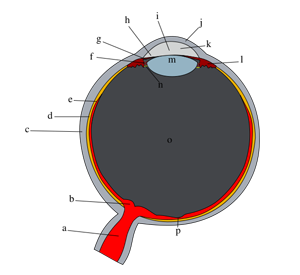
Refers to the argument that certain biological systems are too complex to have evolved from simpler, or "less complete" predecessors, and are at the same time too complex to have arisen naturally through chance mutations. An "irreducibly complex" system is defined by the term's originator, biochemistry professor Michael J. Behe, as one "composed of several well-matched, interacting parts that contribute to the basic function, wherein the removal of any one of the parts causes the system to effectively cease functioning". These examples are said to demonstrate that modern biological forms could not have evolved naturally. The argument is used in a broader context to support the idea that an intelligent designer was involved, at some point, in the creation of life, against the theory of evolution which argues no designer is required. In a manner of speaking, the IC argument is a definition of the "designer", or at least "what was designed", a definition that has proven elusive in the past. The most common examples used in argument are the complexity of the eye (right), the Blood clotting cascade, or the motor in a cell's flagellum.

The examples offered to support the irreducible complexity argument have generally been found to fail to meet the definition and intermediate precursor states have been identified for several structures purported to exhibit irreducible complexity.

For instance, precursors to the flagellum's motor can be found being used as ionic channels within bacteria, known as the Type III Secretory System. This is true for most of the structure of the flagellum in general; of the 42 proteins found in the flagellum, 40 have already been found in use in different biological pathways. Even Behe's toy model used to illustrate the concept, the mouse trap, was countered by critics including biology professor John McDonald, who produced examples of how he considered the mousetrap to be "easily reducable", eventually to a single part. Critics consider that most, or all, of the examples were based on misunderstandings of the workings of the biological systems in question, and consider the low quality of these examples excellent evidence for the argument from ignorance.

More...
 Irreducible Complexity 01/04–04/04

Friday, April 04, 2008

Specified complexity

Possible targets with complexity ranking and probability not exceeding those of attained target T. Probability of set-theoretic union does not exceed φ(T) × P(T)Specified complexity is an argument proposed by American mathematician, philosopher, theologian, and neo-creationist William Dembski, and used by him in his works promoting intelligent design. According to Dembski, the concept is intended to formalize a property that singles out patterns that are both specified and complex. Dembski states that specified complexity is a reliable marker of design by an intelligent agent, a central tenet to intelligent design which Dembski argues for in opposition to modern evolutionary theory. The concept of specified complexity is widely regarded as mathematically unsound and has not been the basis for further independent work in information theory, complexity theory, or biology. Specified complexity is one of the two main arguments used by intelligent design proponents, the other being irreducible complexity.

In Dembski's terminology, a specified pattern is one that admits short descriptions, whereas a complex pattern is one that is unlikely to occur by chance. Dembski argues that it is impossible for specified complexity to exist in patterns displayed by configurations formed by unguided processes. Therefore, Dembski argues, the fact that specified complex patterns can be found in living things indicates some kind of guidance in their formation, which is indicative of intelligence. Dembski further argues that one can rigorously show by applying no free lunch theorems the inability of evolutionary algorithms to select or generate configurations of high specified complexity.

More...

Monday, December 10, 2007

Irreducible complexity

Flagellum of Gram-negative BacteriaIrreducible complexity (IC) is the argument that certain biological systems are too complex to have evolved from simpler, or "less complete" predecessors, and are at the same time too complex to have arisen naturally through chance mutations. An "irreducibly complex" system is defined by the term's originator, biochemistry professor Michael J. Behe, as one "composed of several well-matched, interacting parts that contribute to the basic function, wherein the removal of any one of the parts causes the system to effectively cease functioning". These examples are said to demonstrate that modern biological forms could not have evolved naturally. The argument is used in a broader context to support the idea that an intelligent designer was involved, at some point, in the creation of life, against the theory of evolution which argues no designer is required. In a manner of speaking, the IC argument is a definition of the "designer", or at least "what was designed", a definition that has proven elusive in the past. The most common examples used in argument are the complexity of the eye, the Blood clotting cascade, or the motor in a cell's flagellum.

The flagella of certain bacteria constitute a molecular motor requiring the interaction of about 40 complex protein parts, and the absence of any one of these proteins causes the flagella to fail to function. Behe holds that the flagellum "engine" is irreducibly complex because if we try to reduce its complexity by positing an earlier and simpler stage of its evolutionary development, we get an organism which functions improperly.

There are many examples of molecular machines, such as the bacterial flagellum, that are composed of numerous elements. Behe rightly points out that such machines are irreducibly complex in that if any one part were removed, the function in question would be instantly lost. How then could such a machine be built up gradually if it will not work to any selectable degree until all its parts are present in their proper order?

Kenneth Miller, a well-known evolutionary biologist from Brown University, points out that certain subsystems of the bacterial flagellum would still be in working order if other parts were removed. The overall flagellar motility system requires around 50 different types of proteins (and underlying genes to code for them). However, it is quite interesting to note that 10 of these genes and the resulting structure within the flagellar motility system also code for what is known as a type III secretory system (TTSS). The TTSS is used as a toxin injector by some especially nasty bacteria that attack both animals and plants. Therefore, Kenneth Miller argues that it is mistaken to use the flagellar system as an example of a truly irreducibly complex machine since around 40 different parts could be removed from the machine without a complete loss of function. Miller also points out that the majority of the protein parts of the flagellar system have other functions as parts of other systems within bacteria.

More...

Saturday, April 28, 2007

Irreducible complexity

Schematic diagram of the human eye -- click for details ---Irreducible complexity (IC) is the argument that certain biological systems are too complex to have evolved from simpler, or "less complete" predecessors, and are at the same time too complex to have arisen naturally through chance mutations. An "irreducibly complex" system is defined by the term's originator, biochemistry professor Michael J. Behe, as one "composed of several well-matched, interacting parts that contribute to the basic function, wherein the removal of any one of the parts causes the system to effectively cease functioning". These examples are said to demonstrate that modern biological forms could not have evolved naturally. The argument is used in a broader context to support the idea that an intelligent designer was involved, at some point, in the creation of life, against the theory of evolution which argues no designer is required. In a manner of speaking, the IC argument is a definition of the "designer", or at least "what was designed", a definition that has proven elusive in the past. The most common examples used in argument are the complexity of the eye (right), the Blood clotting cascade, or the motor in a cell's flagellum.

The examples offered to support the irreducible complexity argument have generally been found to fail to meet the definition and intermediate precursor states have been identified for several structures purported to exhibit irreducible complexity.

More...

Friday, January 19, 2007

Irreducible complexity

Schematic diagram of the human eyeIrreducible complexity (IC) is the argument that certain biological systems are too complex to have evolved from simpler, or "less complete" predecessors, and are at the same time too complex to have arisen naturally through chance mutations. An "irreducibly complex" system is defined by the term's originator, biochemistry professor Michael J. Behe, as one "composed of several well-matched, interacting parts that contribute to the basic function, wherein the removal of any one of the parts causes the system to effectively cease functioning". These examples are said to demonstrate that modern biological forms could not have evolved naturally. The argument is used in a broader context to support the idea that an intelligent designer was involved, at some point, in the creation of life, against the theory of evolution which argues no designer is required. In a manner of speaking, the IC argument is a definition of the "designer", or at least "what was designed", a definition that has proven elusive in the past. The most common examples used in argument are the complexity of the eye (right), the Blood clotting cascade, or the motor in a cell's flagellum.

The examples offered to support the irreducible complexity argument have generally been found to fail to meet the definition and intermediate precursor states have been identified for several structures purported to exhibit irreducible complexity.

More...
 

Subscribe


LifeNews.com

Desiring God Blog

Youth for Christ International